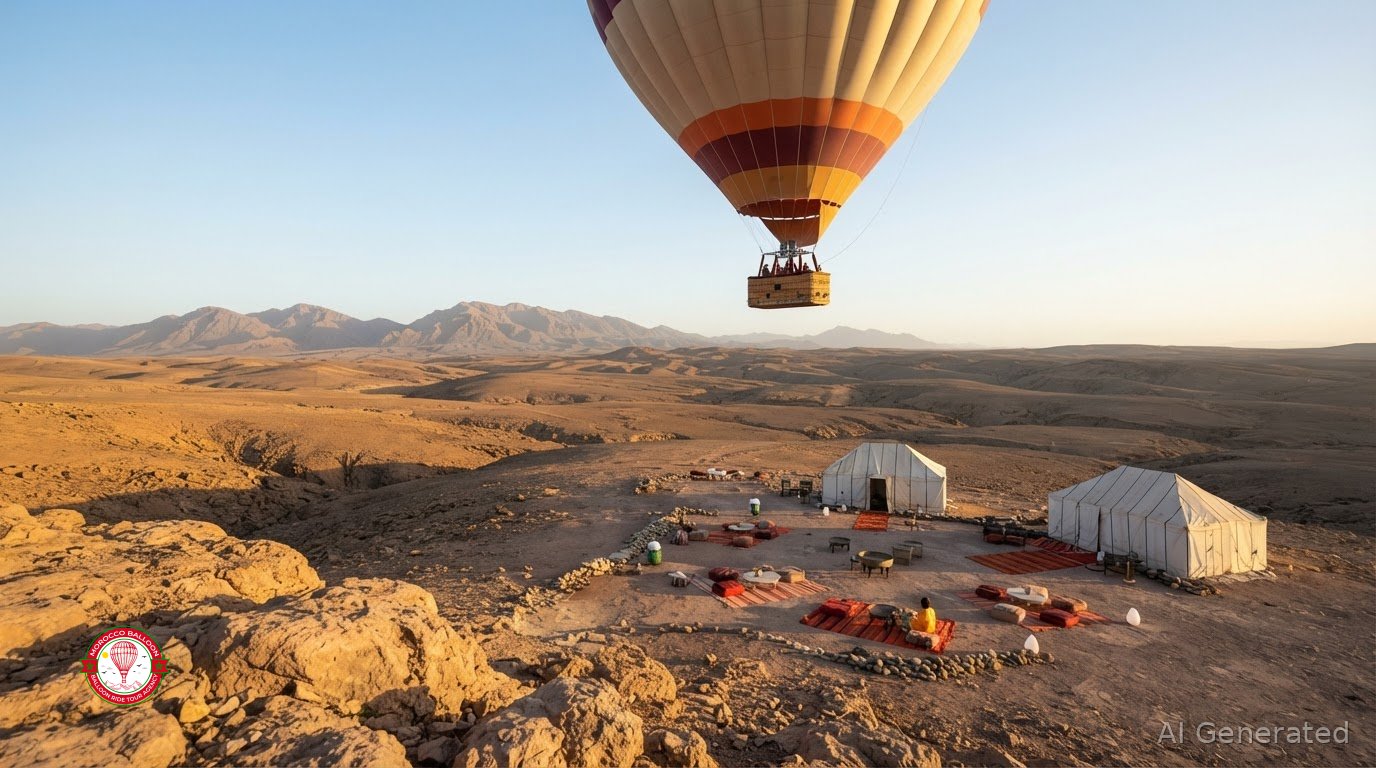
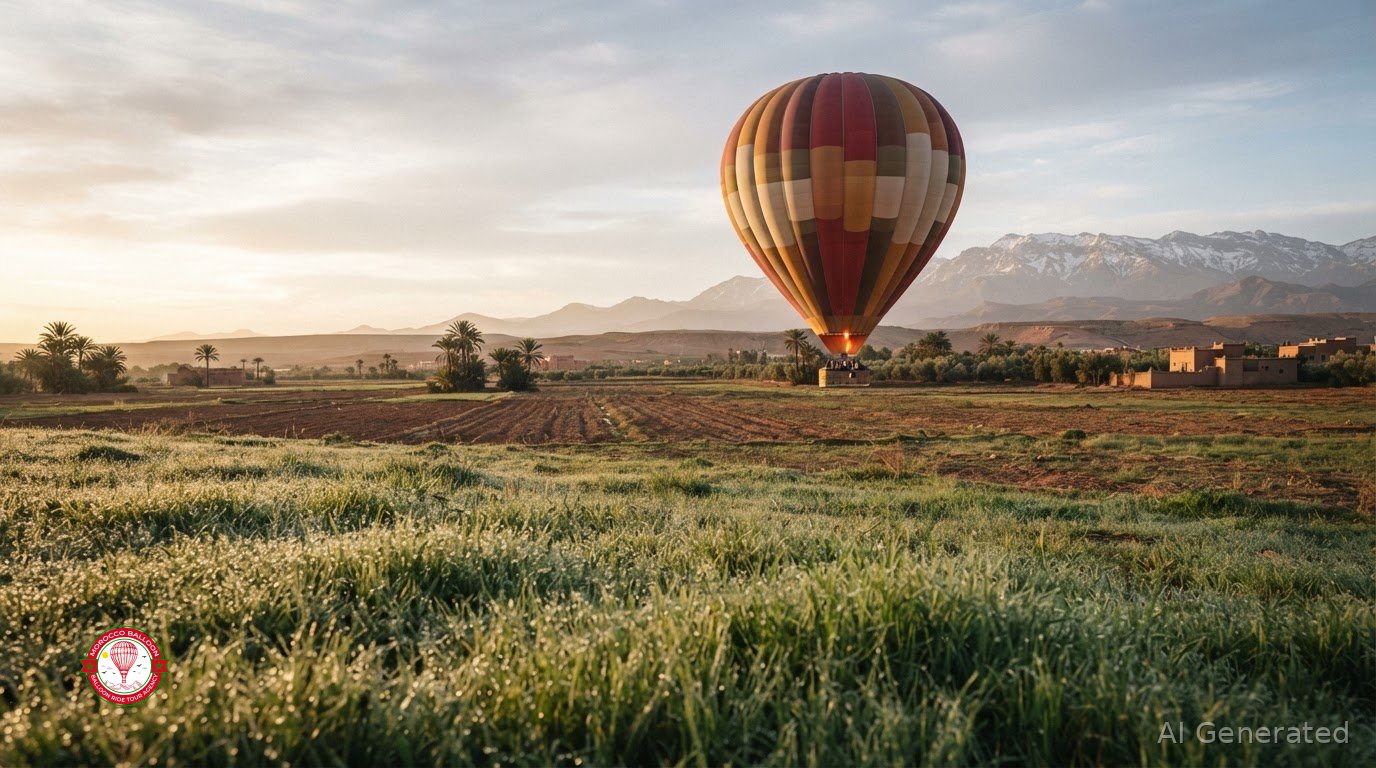
Morning dew is one clue when assessing a rural field at dawn; wind, visibility, and ground conditions also shape launch decisions. Understanding morning dew and launch field conditions in rural Morocco means treating each site as a changing landscape, not judging it by damp grass alone. This guide explains how to read these observations and why pilots consider the wider conditions before a balloon flight.
Key Takeaways
- Learn which field measurements help describe dawn conditions, and how observations can complement a wider weather picture.
- Understand why dew forms and how nearby irrigation can affect the moisture you see across rural fields.
- See why there is no single drying time: sunlight, shade, airflow, and ground conditions all play a part.
- Find out why surface dampness is only one consideration when assessing a field launch, and how a sunrise balloon flight can bring you above the countryside.
Meteorological data collected at field sites
Morocco’s coast, mountain country, and inland plains call for different field readings. Coastal conditions may reflect nearby sea air; mountain conditions vary with slope and elevation; inland fields may be more exposed. These are broad contrasts, not launch rules. The pilot assesses the actual wind, visibility, and ground conditions at the site.
A suitable launch area needs firm, reasonably level ground, clear space, and safe access for people and equipment. Soft mud, standing water, steep slopes, and nearby obstacles can all pose practical challenges. These considerations do not replace the pilot’s assessment of the site and current conditions.
Before a rural launch, compare a local forecast with observations at the field. Note wind direction and changes, cloud cover and visibility, damp ground, and signs of recent irrigation. A forecast describes a wider area, so conditions at the chosen field may differ. The pilot’s on-site assessment matters.
Wet grass can be slippery, while mud can make walking and moving equipment harder. Low visibility may obscure obstacles, and shifting winds can make conditions less predictable. The pilot weighs any concerns at the field alongside the broader weather picture before deciding whether to proceed.
One useful Moroccan example is SAT’IRR, which calculates a daily water balance at the user-plot scale. Situation: an olive plot in Chichaoua is being assessed for irrigation. Action: the model compares four water-balance scenarios, including flood, sprinkler, standard drip, and deficit drip irrigation. Result: the comparison gives a plot-specific view of water use, but does not determine whether a field is suitable for launching.
For a practical field check, consider the surface, nearby slopes, access route, visibility, and wind direction together. A dew-covered patch beside an irrigated plot, for example, reveals surface moisture, not the full weather conditions. This broader assessment helps distinguish a damp field from a safe launch decision.
During the 2023 SAT’IRR online simulation on a Chichaoua olive plot, precipitation, wind speed, air temperature, humidity, and global radiation were measured every 30 minutes; weather and irrigation station data were independently sent to the server twice a day. Morocco recorded 18 millimeters during the same timeframe in the previous year.
What causes morning dew in rural Morocco, and when is it most common?
Dew forms when a surface cools enough for water vapor in nearby air to condense. On a clear night, soil, leaves, and grass lose heat; moist air touching those cooler surfaces can leave tiny droplets. A shaded field edge may glisten at dawn while exposed ground nearby looks dry. Dew is most likely toward the coolest part of the night and around sunrise, after surfaces have had hours to cool.
Moisture in the air and recent ground conditions both shape what you see. A field near irrigated crops may have more local moisture than dry ground farther away. In Morocco’s Saharan and pre-Saharan agro-climatic area, annual rainfall is less than 100 mm, but that broad climate description does not rule out dew or irrigation. A small wet patch can have a different cause from the wider landscape.
Season and weather matter, but no single month describes every rural site. Clear skies allow surfaces to cool, while cloud cover can reduce that cooling. Light winds let a cool layer linger near the ground; stronger air movement mixes it with warmer air. After sunrise, sunlight warms leaves and soil, and droplets evaporate. Shade, dense vegetation, and damp soil can keep moisture visible longer.
Irrigation can also complicate a dawn observation. In a survey of 15 farmers in the Haouz region of Marrakech, 14 relied solely on direct observation of soil and plants to decide when to start irrigation. That example shows how visible moisture informs field decisions, but wet leaves alone cannot tell you whether water came from dew, irrigation, or both.
Consider a rural olive plot after a clear night. Situation: grass is wet at first light, while the nearby track remains dry. Action: compare shaded and exposed patches, then look for irrigation channels or recently watered rows. Result: the pattern helps distinguish localized moisture from field-wide dampness, without treating appearance as proof. For travelers, dew is a useful clue, not a complete record of overnight conditions.

How long does dew typically take to dry in Moroccan fields after sunrise?
Dew does not dry at a uniform rate across Moroccan fields. When assessing morning dew and launch field conditions in rural Morocco, consider how quickly sunlight warms each surface. Droplets evaporate at different rates depending on exposure, airflow, humidity, and moisture levels. A sunny, open patch can dry before shaded grass beside a wall or tree. Sunrise begins the warming process, but does not set a universal deadline.
Surface type matters, too. Fine grass and leaves hold visible droplets, while bare, firm soil may appear dry sooner. Situation: dew beads on grass beside an olive grove. Action: compare it with the exposed track and shaded ground under the trees. Result: differences in drying reveal how shade and vegetation affect each area, rather than predicting conditions across the whole field.
Air movement can speed evaporation by carrying moist air away from the surface. Stronger sunlight adds heat, while cloud cover can slow warming. In a sheltered hollow, cool air and shade may keep moisture visible after nearby open ground has dried. A breeze may help dry grass, but wind conditions must also be assessed separately for any planned launch.
Recent irrigation changes the picture. Situation: crop rows were watered before dawn, and leaves remain wet after sunrise. Action: distinguish the damp rows from nearby grass that collected overnight dew. Result: irrigation can keep surfaces wet as sunlight rises, so visible moisture may persist for reasons beyond overnight condensation.
To understand morning dew and launch field conditions in rural Morocco, compare a shaded spot, a sunlit patch, and the access track as morning light strengthens. Note whether droplets shrink, soil stays soft, or water appears along irrigated rows. These changes offer a practical snapshot, not a dependable clock. Launch decisions still depend on the site and current conditions, not on whether every blade of grass has dried.
How does dew affect launching hot-air balloons, drones, model aircraft, or paragliders from a field?
Dew affects each launch differently. For a hot-air balloon, wet grass can make footing slippery during ground preparation and passenger movement. Mud can also complicate access for support vehicles and equipment. Situation: an open field is damp after a clear night. Action: assess the surface and access route alongside current weather conditions. Result: ground moisture becomes one part of the launch decision, not the only factor.
Drone launches involve different concerns. Moisture can collect on the aircraft, landing surface, or controller, and damp grass may obscure a stable takeoff spot. Situation: a drone is set on dew-covered grass. Action: use a dry, firm surface and inspect the aircraft for visible moisture before operation. Result: the aircraft and controls start from a clearer, drier setup. Follow the device maker’s guidance on moisture exposure.
For model aircraft, wet ground can affect wheels during takeoff and landing. Moisture on wings or control surfaces may also change handling. Situation: a small model aircraft is positioned on a damp strip. Action: move it to firm, dry ground and check its surfaces. Result: the takeoff area is easier to assess, leaving the pilot to focus on wind and visibility.
Paragliders involve a canopy spread across the ground. Dew can wet fabric and lines, while slippery grass makes setup less secure. Situation: the canopy lies on a damp slope. Action: assess the ground, wind, and visibility before laying it out. Result: the pilot can judge whether conditions suit the site and activity. A dry-looking patch alone does not establish that flying conditions are suitable.
Across all four activities, separate surface moisture from wind, visibility, and access. A dry track beside wet grass, for example, may help ground movement but says nothing about changing wind. For a sunrise perspective on Marrakech’s countryside, explore a hot-air balloon flight, where the pilot assesses flight conditions.
Regional context matters too. Morocco experienced a declining tendency in rainfall from 1901-1946; Morocco’s average rainfall rose from 1947-1964 and declined from 1965-1985. Morocco’s modified drought indicator assigns a 20% weighting to evapotranspiration data from MODIS and FEWS-Net. A SAT’IRR simulation tested irrigation alternatives from November 12, 2023, using weather forecasts for future ET0 during the first five days.
Morocco Balloon
Morocco Balloon connects the details of a rural launch setting with a sunrise balloon flight. Dew can change how a field looks at first light, but it is only one part of the conditions considered before a flight. Flights are operated by licensed partner balloon operators, and pilots follow weather procedures when assessing whether conditions are suitable. The decision to launch depends on an assessment of conditions on the day.
For travelers who want to pair a dawn view with more of Morocco, Morocco Balloon offers balloon experiences combined with a city and souks tour or an Atlas Mountains day trip. Choose based on how you want to spend the rest of your day, not on whether a field looks damp.
If you have questions about planning a balloon experience around Marrakech, contact Morocco Balloon.
Plan a dawn experience around the wider landscape
Let your morning in Morocco set the rhythm for the day ahead. You might follow the quiet of dawn with time among historic streets, or trade the city’s bustle for wide mountain views. Consider whether you want cultural discovery, open scenery, or active adventure to choose an itinerary that feels personal rather than like a hurried checklist.
Keep your plans flexible around the experience, with room to enjoy the transition from cool first light to the warmth of the day. The countryside offers a striking change of perspective, while a combined outing can carry that sense of discovery into the hours that follow. Morocco Balloon pairs flights with quad biking, a city and souks visit, or an Atlas Mountains day trip, so choose the experience that fits your travel style.
Make sunrise part of the story you’ll remember from Morocco. Explore experiences with Morocco Balloon and choose a day that brings the landscape into view.
Frequently Asked Questions
What are typical morning humidity, temperature, and dew point conditions in rural Morocco by season?
Seasonal readings for humidity, temperature, and dew point are not provided here, and conditions can vary by location and date. For current details relevant to your flight, confirm them with Morocco Balloon at booking. Relative humidity describes moisture in the air, and the dew point is the temperature at which condensation can form.
What does “launch field” mean in rural Morocco, and what activities use one?
A launch field is an open area used to prepare and begin an activity that takes off from the ground. Depending on the activity, it may be used for hot-air balloons, drones, model aircraft, or paragliders. A drone operator, for example, needs space for setup and takeoff, while a balloon crew also needs room to prepare equipment and support the flight. Ground conditions vary by site.