
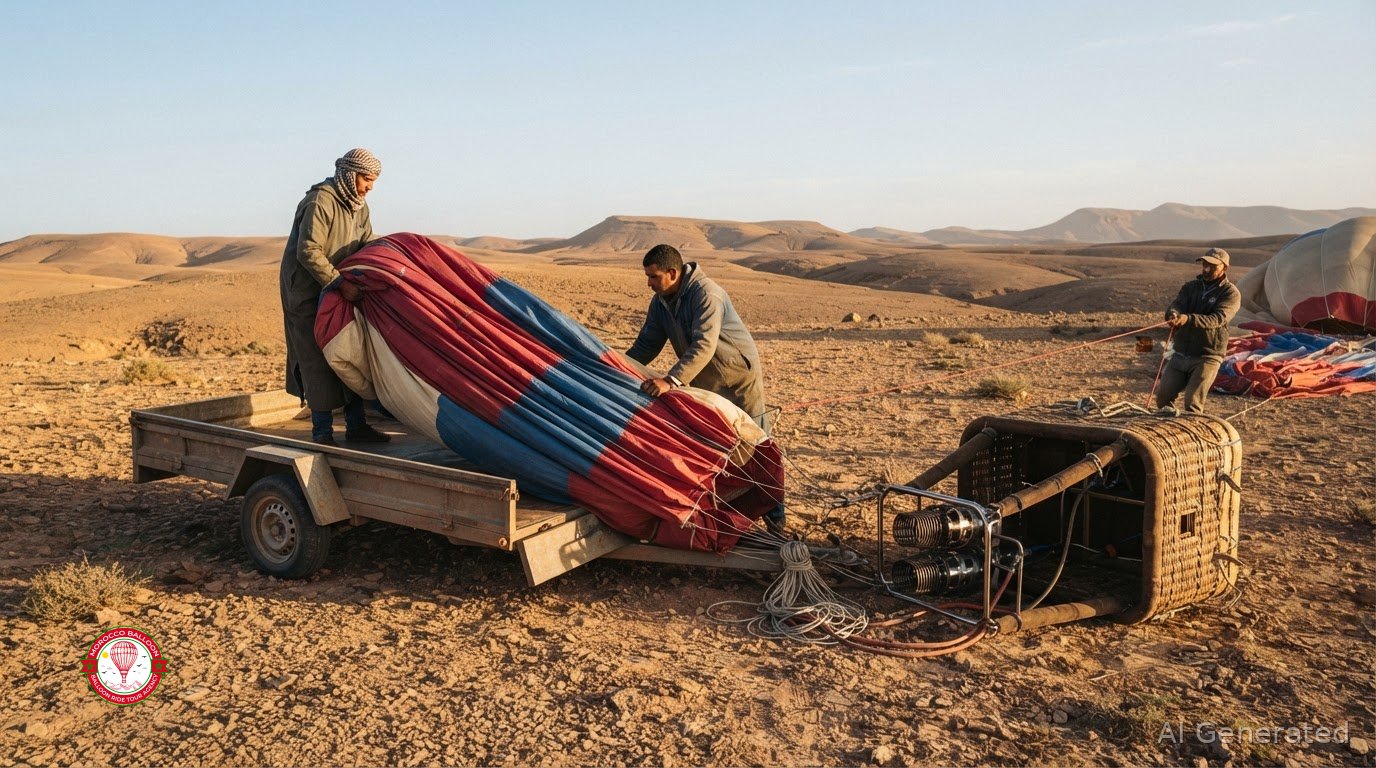
After touchdown, the hot air balloon deflation and pack down process is a coordinated transition from flight to ground work. The pilot and chase crew manage the balloon while passengers follow instructions. The pace and sequence depend on the landing conditions, the balloon’s equipment and the space available at the site.
Beneath the brightening sky, the countryside may feel still as the crew shifts from the aerial experience to practical tasks around the basket and envelope. This final phase asks passengers to observe and leave room for crew members to coordinate their work.
Knowing what happens after touchdown can make landing feel like a natural part of the experience. The sections ahead explain the chase crew’s role, how equipment is prepared for transport, how deflation systems work and why balloon design and ground conditions affect packing.
Key Takeaways
- See how the chase crew helps steady the basket and manage the balloon after touchdown.
- Learn why the basket and rigging are separated before equipment is loaded for transport.
- Understand how the pilot uses the deflation system to release hot air from the envelope.
- Find out how the crew presses out remaining air and folds the fabric for packing.
Chase crew ground assistance
After touchdown, the chase crew meets the pilot at the landing site. Crew members steady the basket after it lands, which can sometimes be rough. Passengers should wait for the pilot’s direction before leaving the basket. The pilot and crew then coordinate as they turn their attention from the flight to the equipment.
When the crew reaches the landing area, the pilot may hand a crew member a drop line connected to the basket. The crew uses it to help guide the balloon to a suitable place for deflation while the pilot manages the balloon. The spot needs enough open space to spread out the envelope. This is the first stage of the hot air balloon deflation and pack down process after landing.
The pilot and ground crew look for an open area with room to spread the envelope, away from power lines. If the balloon lands on private property, the crew tries to get permission before taking it down, when possible. Site access also affects where the chase vehicle can stop and how the team reaches the equipment. Clear working space helps the crew work without crowding the basket or envelope.
In a field, the crew avoids driving through crops, entering through locked gates or cutting fences. Instead, they stay near the field’s edge to limit disturbance. For example, the vehicle may stop at an accessible boundary while crew members help manage the balloon. This approach matters particularly when the landing site is private or difficult to reach.
Ground assistance continues through deflation and packing, not only the first moments after landing. An experienced hot-air-balloon crew typically takes 20 to 30 minutes to assist after touchdown and pack up. During the hot air balloon deflation and pack down process after landing, crew members help manage the basket, envelope, and equipment as the pilot directs the sequence. The landing position, site access, and space around the balloon all affect how the work unfolds.
Disconnecting the basket and loading equipment onto a trailer
Passengers leave the basket only when the pilot directs them. The crew needs clear space to handle the equipment, so wait for instructions and stay out of the work area. The basket remains part of the setup until the crew separates its components. This pause gives the pilot and chase crew time to coordinate the work around the envelope and basket.
Once the envelope is ready to pack, the crew disconnects the basket from its rigging. This separates the basket from the fabric and connected equipment so each part can be prepared for transport. The crew handles the connections; passengers should not touch them or try to help with the rigging. Keeping the components separate also helps the team organize what needs loading onto the trailer.
The crew packs the folded envelope into its bag and gathers the basket and other equipment for loading. Each component has different handling needs, so they prepare the parts separately. For example, the envelope becomes a compact fabric pack, while the basket remains a separate item for the trailer.
After pack-down, the crew brings the packed envelope, basket and other equipment together for transport, then clears the area as the trailer is prepared to leave. The loading order depends on the landing position and available space. The aim is to collect every balloon component without leaving fabric or rigging spread across the ground.
For passengers, the useful distinction is between leaving the basket and the crew’s equipment work. Follow the pilot’s directions, keep clear while the basket is disconnected, and let the chase crew manage loading. If you’re planning a sunrise balloon flight, this ground sequence is part of returning the balloon and its equipment from the landing site.
Parachute valve and rip panel operation
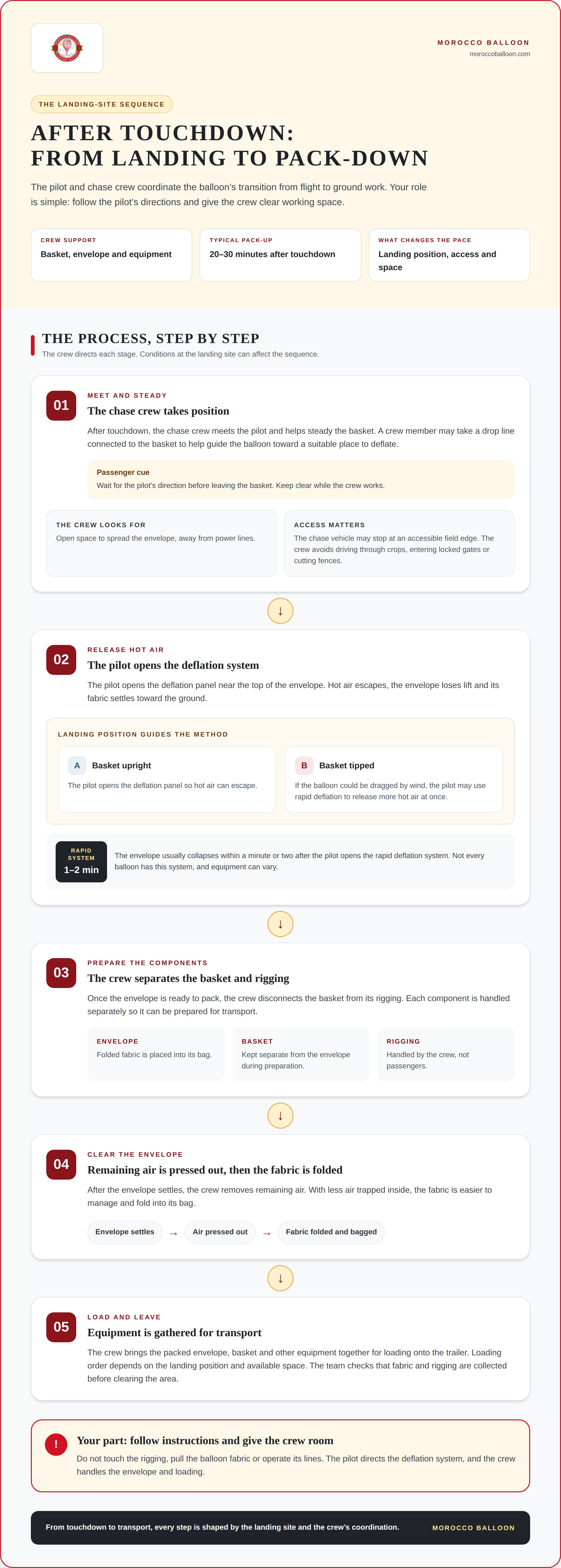
After touchdown, the pilot opens the deflation panel near the top of the balloon. Hot air escapes and the envelope gradually loses lift. The parachute valve is part of this system, allowing the pilot to manage the release of air while the crew prepares the envelope for packing. Passengers should leave this work to the pilot and ground crew.
A rapid deflation system releases a larger volume of hot air. The pilot operates it by pulling the parachute inward, opening the top of the envelope more fully. This faster release is useful if the basket tips and wind could drag the balloon. Rapid deflation helps collapse the envelope and limit further movement across the ground.
The crew’s sequence depends on the balloon’s position after landing. If the basket is upright, the pilot opens the deflation panel to let hot air escape. If the basket tips, the pilot may activate rapid deflation to bring the envelope down quickly. Both methods release air, but the rapid system is designed to release more at once.
As air escapes, the fabric loses its rounded shape and settles toward the ground. The envelope usually collapses within a minute or two after the pilot opens the rapid deflation system. The crew can then manage the deflated fabric without the balloon being held aloft by warm air. This marks the shift from landing control to packing.
Not every hot-air balloon has a rapid deflation system, so equipment can vary. A rip panel also releases air from the envelope, but the pilot operates the system fitted to that balloon. The key distinction is that the top panel releases hot air, while rapid deflation speeds the collapse when needed. Never pull the balloon fabric or operate its lines yourself. The pilot directs the system, and the crew handles the envelope once it settles.
Squeezing air from and folding the envelope
Once the envelope settles, the crew removes remaining air, folds the fabric and packs it away. Removing trapped air first makes the envelope easier to manage on the ground.
Deflation Steps After Landing
Deflation after landing means releasing hot air, bringing down the envelope and preparing its fabric for packing. The pilot opens the deflation system, then the crew removes remaining air and folds the envelope into its bag. This turns a spread-out canopy into equipment ready for transport. The European Union describes rapid deflation as a way to prevent the envelope from sailing or being dragged excessively after touchdown.
Pack-Down Differences by Balloon Type
Pack-down varies with the envelope’s design and how much fabric the crew needs to gather. There is no single folding pattern for every balloon; the crew follows the envelope’s construction and packs it into its bag. The landing site and packing work may therefore look different from one balloon to another, even though releasing air and folding the fabric are central steps.
Pack-Down Time and Equipment
An experienced crew typically takes 20 to 30 minutes to assist after touchdown and pack up. The pilot uses the balloon’s deflation system, while the crew manages the envelope and its load tapes. A crown line helps control the envelope during deflation, and the folded fabric goes into a bag. The equipment used depends on the balloon’s fitted system and packing arrangement.
Deflation Safety Risks
Wind can keep a deflated envelope moving across the ground, so rapid release helps limit sailing or dragging. The pilot and crew manage that movement; passengers should stay clear of the fabric and follow crew directions. Only the load tapes should be pulled on the envelope. The fabric is cold packed so the pilot can heat it later without burning it. Wind and uneven ground can make controlling the envelope more demanding, so the crew handles the deflation and folding.
Morocco Balloon
We can help you plan a balloon experience and understand how the booking fits your travel plans. The flight itself is operated by licensed partner balloon operators, while we arrange the booking and related ground arrangements.
If you’re weighing a sunrise flight against other plans during your stay, we can help you explore the available options and choose a suitable next step.
For help planning your balloon experience, contact us.
Plan Your Next Marrakech Morning
Understanding how the hot air balloon deflation and pack down process after landing works can help you feel more at ease as you plan your flight. Then you can look ahead to the experience you want, from a city and souks tour to an Atlas Mountain day trip.
We offer a Hot Air Balloon Flight and Quad Biking, a Marrakech City and Souks Tour with Hot Air Balloon Ride Half Day, and a Hot Air Balloon Experience and Atlas Mountain Day Trip. Each pairs a balloon flight with a different experience, from outdoor activity to city discoveries and mountain scenery.
Choose the kind of day that suits your plans, and let the sunrise be the beginning of it. Contact Morocco Balloon to talk through your next step. Marrakech’s changing light and landscapes are waiting to be seen from above.
Frequently Asked Questions
How do balloon crews safely vent hot air from the envelope?
After landing, the pilot opens the balloon’s deflation system to let hot air escape through the top of the envelope. If rapid deflation is needed, the pilot uses the system fitted to that balloon. The crew manages the fabric as it settles. Passengers should follow instructions and keep clear of the envelope and its lines while the crew works.
How is a balloon envelope folded and packed into its bag?
Once the envelope is down, the crew removes remaining air, folds the fabric and packs it into a bag. They pull only on the load tapes, not other parts of the envelope. The crew manages the folding and packing, so passengers should leave the fabric alone, even if it looks ready to gather.
How are the basket, burner, and fuel tanks secured after landing?
The crew handles the balloon equipment after landing, including separating the basket from its rigging and loading the equipment for transport. Passengers should not touch the basket connections, burner or fuel equipment. The pilot directs the work, and the crew prepares the components for the trailer according to the balloon’s setup.
What crew roles are involved in balloon pack-down?
The pilot operates the balloon’s deflation system and directs the landing work. Chase crew provide ground support, help manage the basket and envelope, and assist with packing and loading. The team’s actions depend on the balloon’s position and the landing site. For example, crew members may guide the envelope while the pilot controls its release.
What should passengers do during balloon deflation and pack-down?
Wait for the pilot’s direction before leaving the basket, then stay clear of the envelope, lines and equipment as the crew works. Don’t pull the fabric or try to help fold it. For example, if the crew is gathering the envelope beside the basket, give them room and follow instructions about where to stand.