Staying hydrated on an early morning tour in Morocco begins before the first light reaches Marrakech, because a dawn departure can lead into hours of city walking, mountain roads, or open desert terrain. Prepare with water before setting out, keep drinking regularly as the day unfolds, and adjust your approach when rising temperatures or more strenuous activity bring heavier sweating. Pay attention to signs such as dizziness, headache, unusual tiredness, or weakness, and respond with a pause in the shade, water, and rest rather than pushing ahead. Rehydration salts or electrolyte tablets may help replace minerals lost through sweat during more demanding outings, while water remains the everyday foundation. This guide explains how to think about water access on different routes, prepare the evening before and morning of your tour, recognize heat discomfort, and make a sensible choice about electrolyte replacement, so you can enjoy Morocco’s landscapes with a clearer plan for your comfort.
Key Takeaways
- Plan ahead for water access: mountain villages and desert camps differ, and remote stretches call for carrying your own supply.
- Know when to pause: respond to heat discomfort with shade, a rest, and water rather than pushing on.
- Use rehydration salts or electrolyte tablets as a way to replace minerals lost through sweating, following the product directions.
- Prepare before dawn with an evening hydration routine, and explore how a balloon flight can pair with an Agafay Desert overnight stay.
Drinking water in Atlas Mountain villages and desert camps
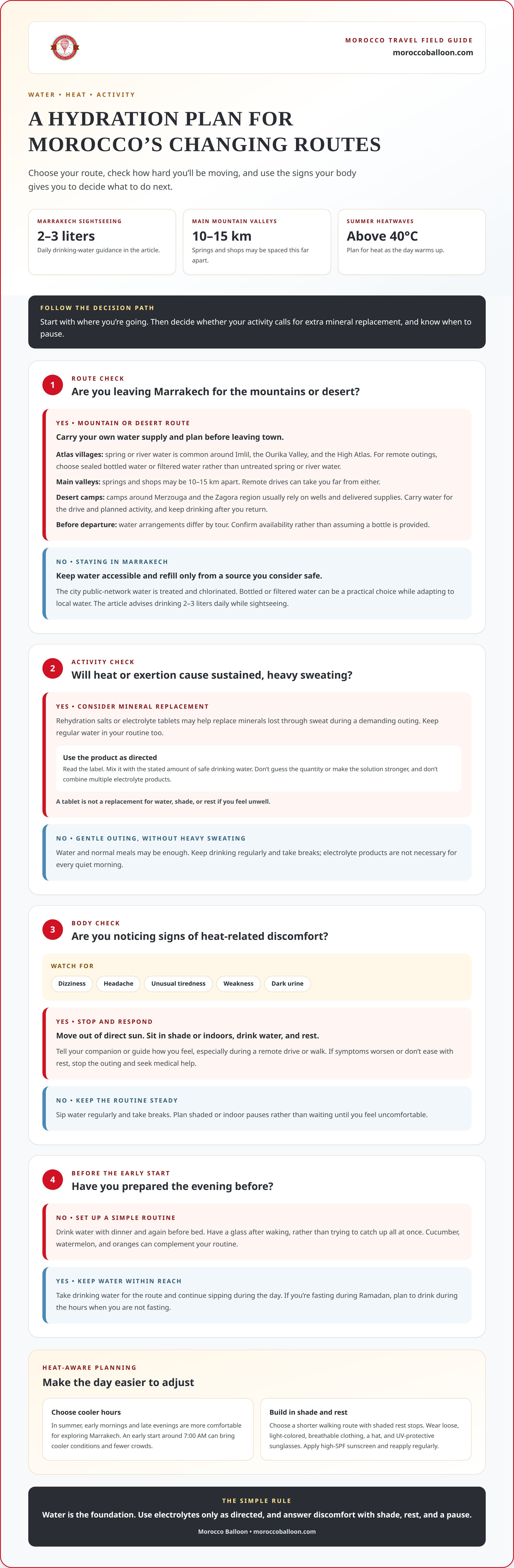
Water access shifts as your Morocco route leaves Marrakech for the Atlas Mountains or desert. Villages around Imlil, the Ourika Valley, and the High Atlas often use spring or river water, unlike treated city supplies. In the main valleys, springs and shops may be spaced 10-15 km apart. Remote drives can leave you far from either, so plan water before leaving town.
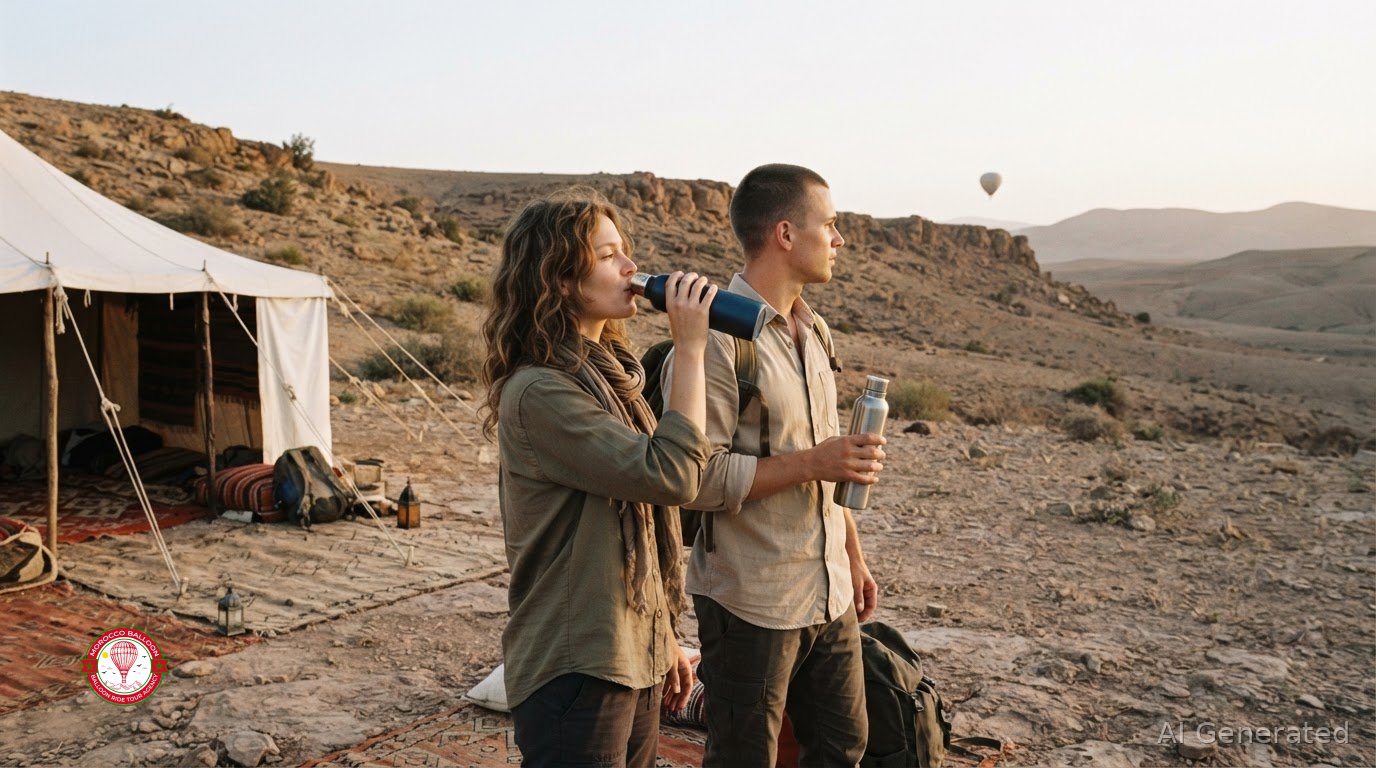
For a remote outing, choose sealed bottled water or use filtered water rather than drinking untreated spring or river water. Desert camps around Merzouga and the Zagora region usually rely on wells and delivered supplies. Carry water for the drive and planned activity, sip along the way, and continue drinking after returning. A refill point may not be close when you need it.
In Marrakech, visitors are advised to drink 2-3 liters daily while sightseeing. City public-network water is treated and chlorinated, but bottled or filtered water can be a practical choice while adapting to local water. Keep a refillable bottle with you and refill it only from a source you consider safe.
Drinking water arrangements differ by tour, so don’t assume a bottle is provided. Confirm water availability before the tour. Bring enough for the route, particularly for long desert drives. To reduce dehydration risk across city, mountain, and desert outings, drink regularly and keep water accessible. During Ramadan, this advice does not establish a separate tour rule. If you’re fasting, plan to drink during the hours when you are not fasting.
Recognizing symptoms of heat-related discomfort
Morocco’s summer temperatures can rise above 40°C during heatwaves, making an easy morning walk feel different as the sun climbs. Notice dizziness, a headache, unusual tiredness, or weakness? Treat the change as a signal to stop, not something to walk off. Dark urine and fatigue can also suggest you’re falling behind on fluids during an active day.
Move out of direct sun and sit somewhere shaded or indoors. Take a break, drink water, and rest before deciding whether to continue. A shaded souk alley or indoor attraction can provide a cooler pause between outdoor stops. Tell your companion or guide how you’re feeling, particularly if symptoms appear during a remote drive or walk.
Plan sightseeing around the heat rather than waiting for discomfort. In summer, early mornings and late evenings are more comfortable times to explore Marrakech. An early start around 7:00 AM can bring cooler conditions and fewer crowds. Choose a shorter walking route with shaded rest stops, and schedule indoor visits during the strongest sun.
Clothing and sun protection can also reduce how exposed you feel. Wear loose, light-colored, breathable clothing, along with a hat and UV-protective sunglasses. Apply high-SPF sunscreen and reapply it regularly, especially after spending time outdoors. Take breaks in shade or indoors rather than relying on water alone to make a hot afternoon comfortable. If symptoms worsen or don’t ease with rest, stop the outing and seek medical help. A flexible itinerary makes it easier to pause and enjoy the day.
Using rehydration salts or electrolyte tablets
Water is essential, but heavy sweating also causes mineral loss. During hot-weather sightseeing or a strenuous outing, rehydration salts or electrolyte tablets may help replace minerals lost through sweat. They can be useful when heat and exertion lead to sustained sweating, but are not necessary for every quiet morning.
Before setting out, read the product label and mix it with the stated amount of safe drinking water. Don’t guess the quantity or make the solution stronger. Keep the instructions with the sachet or tablets, especially if you’re visiting Morocco with children or sharing supplies with travel companions.
Use electrolytes alongside regular water, not instead of it. Sip water during breaks after sweating and continue afterward. A supplement may replace minerals, but it can’t replace shade and rest if you feel unwell. Headache, weakness, or dizziness calls for a pause, not simply another tablet.
When staying hydrated during early morning Morocco tours, pack drinking water and keep any electrolyte sachets or tablets within reach. They may be useful if the morning becomes hotter or activity leads to sustained sweating. Keep your routine simple: drink water regularly, use products only as directed, and don’t combine multiple electrolyte products. For a gentle outing without heavy sweating, water and normal meals may be enough.
Cyclists on hot rides in Morocco are advised to add electrolytes because plain water alone does not replace salts lost through sweating. The same practical distinction applies during other demanding outings: electrolytes are for replacing minerals when sweating is sustained, while regular water remains part of the routine. Keep the product instructions available and prepare the drink with the stated amount of safe water, rather than estimating the mixture.
During a walk or other activity, take breaks and sip water; use electrolyte products only as directed. If headache, weakness, or dizziness develops, stop, seek shade, and rest instead of relying on another tablet. For a gentler outing without heavy sweating, water and normal meals may be enough. Supplements are not a substitute for drinking water, taking breaks, or responding to discomfort.
Hydrating before a Morocco tour
Hydration for a dawn departure begins the evening before, not at the hotel door. Drink water with dinner and again before bed, then have a glass after waking. This steady routine gives you time to drink without trying to catch up all at once. For an active cycling tour, hydration is advised during the 48 hours before flying.
Water-rich foods can complement your hydration routine. Cucumber, watermelon, and oranges are practical choices before a busy day. If you’re leaving early, prepare fruit the night before or have some with breakfast. Place a bottle beside your day bag so it’s ready when you leave.
What you drink matters, too. Enjoy coffee and alcohol in moderation, and don’t rely on sugary sodas or alcohol for hydration. Before an early outing, make water your main drink at dinner and after waking. Having a glass with each meal is a simple habit to maintain while planning your itinerary.
A useful routine for staying hydrated during early morning Morocco tours starts before sleep and continues after sunrise. Drink at dinner, take water before bed, and drink again after waking. Then keep sipping as the day unfolds, especially if Marrakech warms or your walk becomes more active. Don’t wait until thirst catches up with you. For staying hydrated during early morning Morocco tours, arrive at departure already drinking regularly and bring plenty of water for the route. The preparation supports a comfortable start, whether your morning leads through city streets or toward open landscapes.
Marrakech Hot Air Balloon & Agafay Desert Overnight
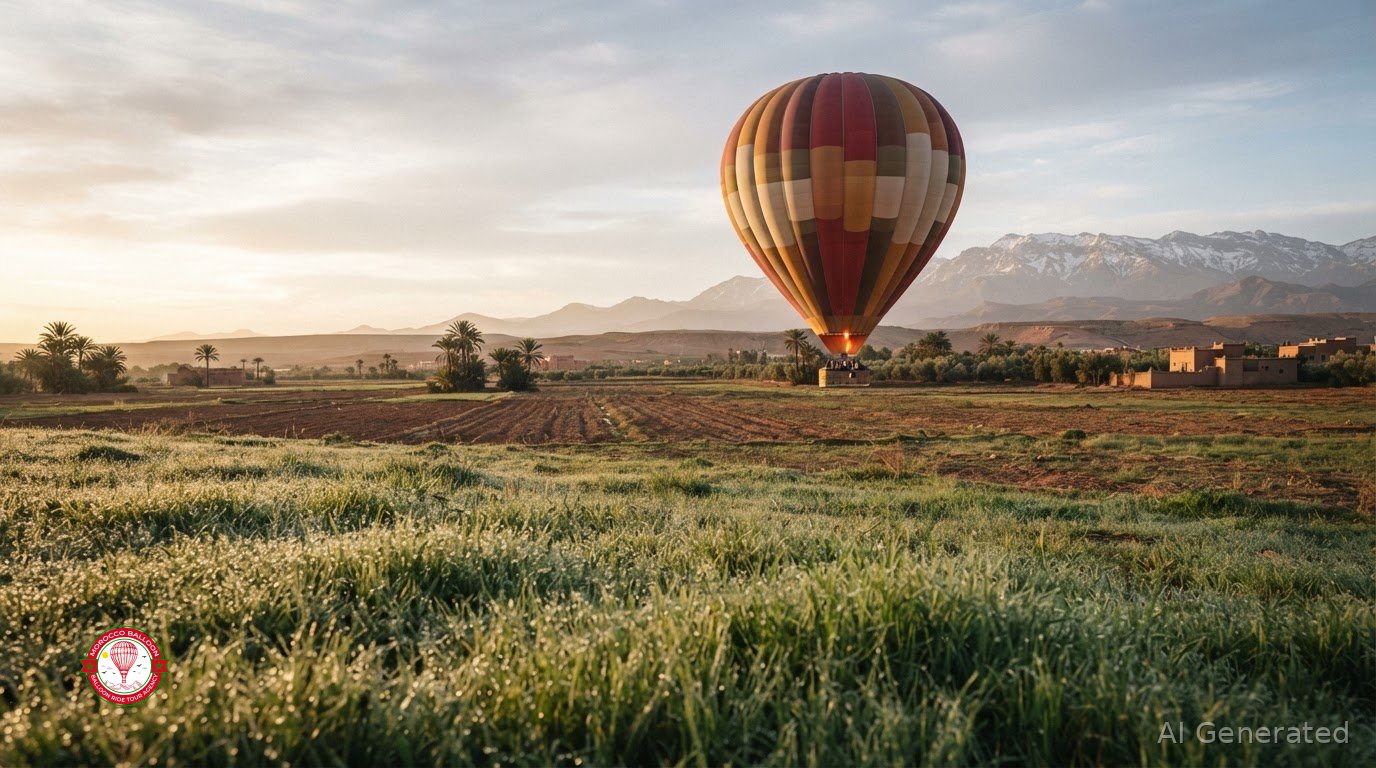
We can help you pair a dawn balloon experience with a wider Marrakech-area itinerary. If you’re planning an overnight desert stay, the Agafay Desert overnight and balloon experience brings both into one trip. Your hydration plan still matters: carry drinking water, sip regularly, and take electrolytes only when sustained sweating makes replacement useful.
Want to continue exploring after your flight? Our Marrakech City and Souks Tour with Hot Air Balloon Ride Half Day pairs a balloon experience with city sightseeing. For mountain scenery, the Hot Air Balloon Experience and Atlas Mountain Day Trip combines a sunrise flight with an Atlas outing. Choose the itinerary that suits your plans, and prepare for the day with water and sensible breaks.
For an early departure, make hydration part of your evening and morning routine. Drink water with dinner and after waking, then keep a bottle accessible as you travel from the city into the countryside. In hot weather, plan for shade and rest. If you feel dizzy, unusually tired, weak, or develop a headache, pause in a shaded place, drink water, and rest before continuing.
Your tour choice and personal preparation work together: the itinerary determines where you explore, while regular drinking and attention to heat discomfort help you look after yourself along the way. Whether you choose a desert outing or a city-and-landscape combination, a little planning leaves more room to enjoy the scenery.
Contact us to discuss your tour plans.
Frequently Asked Questions
How much water should travelers drink during early morning tours in Morocco?
For a full day of sightseeing, travelers in Morocco are advised to drink 2-3 liters of water. Treat that as a daily guide, not a fixed amount for every person or outing. Heat, walking, and sweating affect your needs. Start with water before departure, then drink regularly through the day rather than waiting until you feel thirsty.
How much water should travelers carry per person for a Morocco tour?
There’s no single amount of water that suits every route. Plan according to the time until your next dependable source, the weather, and the amount of walking or driving involved. On remote stretches, carry all the water you’ll need because shops or refill points may be absent. In a city, keep a bottle with you and refill it at a safe source.
Where can travelers refill or buy safe bottled water during Morocco tours?
In Morocco’s main valleys, shops and springs may be found every 10-15 km, but don’t assume a spring is safe to drink untreated. Buy sealed bottled water from shops, or refill using bottled or filtered water. Desert drives and camps can have fewer convenient stops, so stock up before leaving town and keep water accessible during the journey.
Is tap water safe to drink in Moroccan cities and rural areas?
Public-network water in Morocco’s large cities is treated and chlorinated. Mountain villages may use untreated spring or river water, so choose bottled or filtered water there. Desert camps may rely on wells and delivered supplies. If you’re adapting to local water during a short visit, bottled or filtered drinking water is a practical option.
What are the early signs of dehydration and heat illness during a tour?
During a walk or drive, watch for dizziness, headache, unusual tiredness, weakness, or dark urine. Stop, move into the shade, drink water, and rest rather than continuing along the route. Tell your companion or guide if symptoms appear, especially in strong sun. If discomfort worsens or doesn’t ease, seek medical help instead of pushing through.