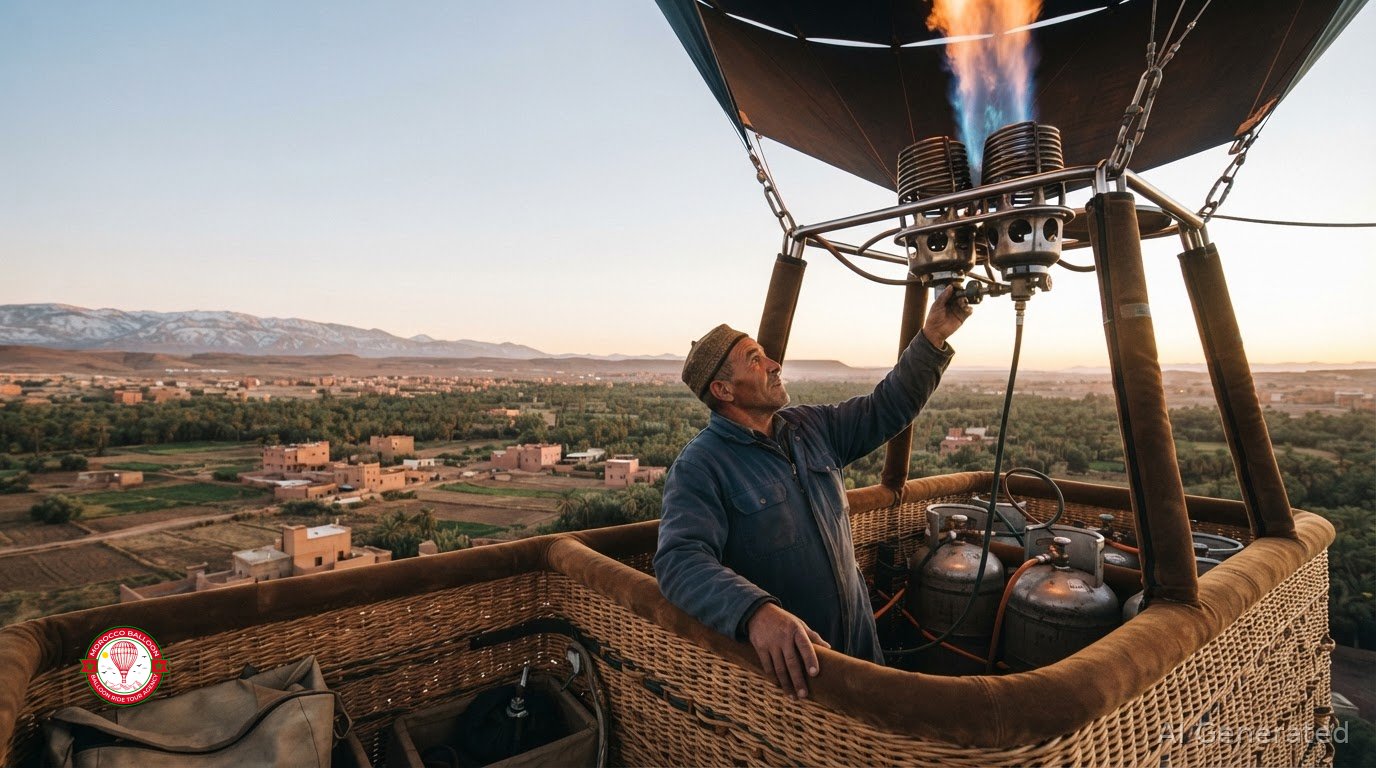
Hot air balloon carbon footprint and propane fuel use are closely linked: propane heats the air that lifts the balloon. Pilots apply heat in controlled bursts rather than continuously, so fuel use is intermittent. However, there is no verified emissions or carbon-footprint figure for a flight in Morocco.
That distinction matters when weighing the beauty of floating above the countryside at sunrise against the flight’s environmental impact. Propane is a fossil fuel, and the burner adds heat as needed to maintain the air inside the balloon.
This article explains how burner use affects propane consumption, which flight conditions influence how often the burner operates, and why a precise footprint requires a verified, flight-specific calculation. The goal is to clarify how the fuel works without presenting an unsupported figure as fact.
Key Takeaways
- Understand why a balloon burner uses short bursts of propane instead of running continuously, and what can affect fuel use during a flight.
- Recognize why a precise emissions estimate for a Marrakech flight requires flight-specific data rather than an unsupported general figure.
- Learn which parts of ballooning’s environmental impact extend beyond burner fuel, including equipment and operating practices.
- Explore how responsible choices and a sunrise flight experience can fit into your Marrakech travel plans.
Intermittent burner use and fuel consumption
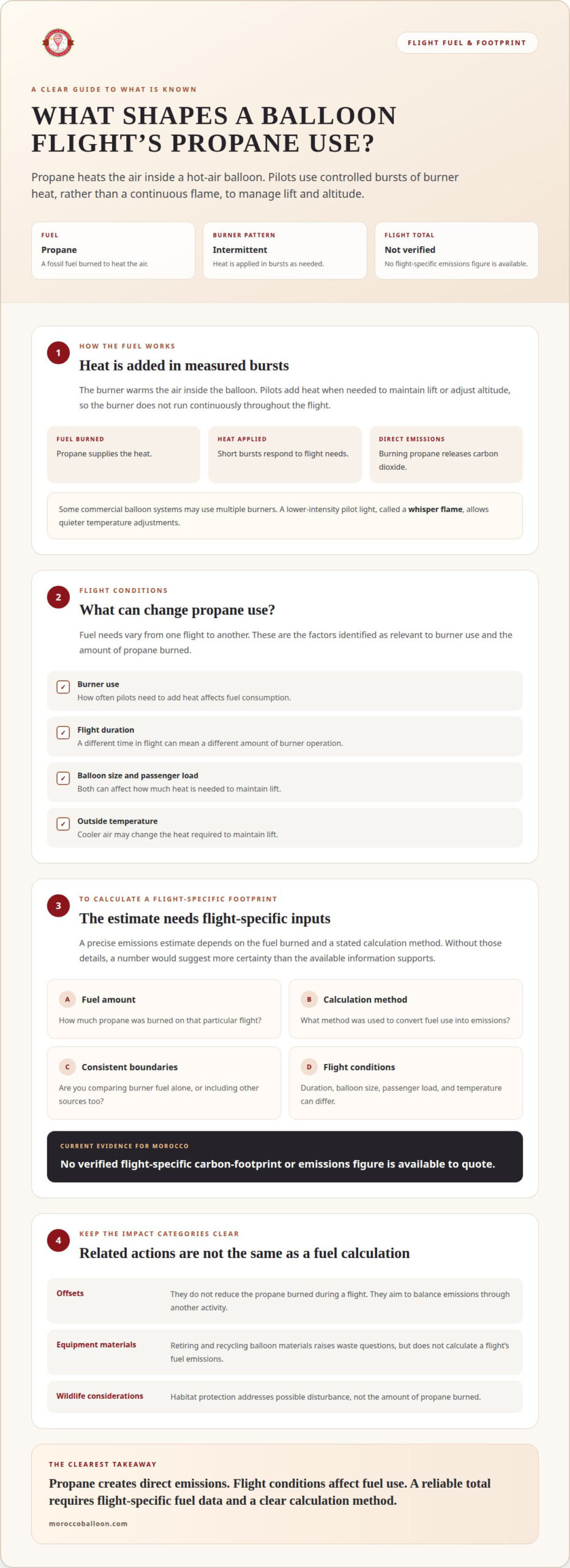
During a flight, pilots use controlled bursts of heat rather than running the burners continuously. How often they fire depends on the heat needed to maintain lift and adjust altitude.
Propane as Balloon Burner Fuel
Propane is the fuel burned to heat the air inside a hot-air balloon. That heat helps create lift, while short burner bursts let pilots manage temperature during flight. For you, the key point is that fuel consumption is intermittent, not a constant burn throughout the journey. Propane became the standard fuel for hot-air-balloon burners in the 21st century.
Commercial balloon systems may use multiple burners to provide heat. Separate burner units and fuel lines can offer redundancy, while pilots control the heat in measured bursts. Burner components are made from heat-resistant metals and alloys designed to withstand very high temperatures. A lower-intensity pilot light, known as a whisper flame, allows quieter temperature adjustments.
Fuel-Efficient Practices and Alternative Fuels
Fuel-efficient operation means applying heat when needed rather than keeping the burner on continuously. Controlled bursts let pilots respond to changing lift and altitude needs, but no specific fuel or emissions reduction can be attributed to this practice here. Propane is the fuel described for balloon burners; any alternative would need to provide suitable heat and work with the balloon’s equipment.
What safety rules govern propane tanks and burners on hot air balloons? According to EUR-Lex, refuelling a balloon is prohibited while people are on board. Passengers must therefore be off the basket during refuelling.
Burner bursts also create sound, making noise relevant when considering nearby wildlife. Wildlife sensitivity can vary by habitat and season, so quieter burner adjustments are a practical consideration, not a quantified impact claim. Multiple burners, controlled heat, and the whisper flame describe how pilots manage burner operation; they do not establish a measured emissions reduction for a flight in Morocco.
No carbon-footprint or emissions figures provided
For a balloon flight in Morocco, there is no verified flight-specific carbon-footprint or emissions figure to quote. Propane combustion releases carbon dioxide, but calculating a flight’s total requires knowing how much fuel it burns and applying an appropriate emissions calculation.
What affects a hot air balloon’s propane consumption and carbon footprint? Burner use, flight duration, balloon size, passenger load, and outside temperature all matter. Cooler air or a heavier load can change how much heat pilots need to maintain lift, while the amount of propane burned determines direct fuel emissions.
Those inputs vary between flights, so a figure from another place or balloon cannot reliably represent a journey with Morocco Balloon. For example, a flight with a different balloon, passenger count, duration, or temperature conditions may require a different amount of burner heat. Without flight-specific fuel data and a stated calculation method, a precise CO2 estimate would imply more certainty than the available information supports.
Offsets are a separate part of the picture. They do not reduce the propane burned during a flight; instead, they aim to balance emissions through another activity, such as supporting tree planting. To assess an offset claim, look for information about the activity, how its climate benefit is calculated, and the time period covered. A general claim about tree planting does not establish a verified footprint for a particular balloon flight.
For a useful comparison, keep the boundaries consistent: include the same flight activities and emissions sources in each estimate. A figure that covers burner fuel alone cannot be directly compared with one that also includes other parts of a journey. The clearest conclusion is qualitative: propane use creates direct emissions, and flight conditions affect fuel consumption, but no verified flight-specific total is available.
Responsible ballooning operations
Environmental responsibility extends beyond the propane used during a flight. Balloon fabric and other materials have a limited lifespan, and recycling them after retirement takes effort and resources. Claims about recycling retired balloon materials should be supported by clear information. This addresses equipment waste, but it does not calculate or erase emissions from a particular flight.
Wildlife considerations also matter in desert environments. Claims about avoiding sensitive desert areas, especially during nesting and mating seasons, should be supported by clear information. Avoiding these locations may help limit disturbance during important periods for wildlife. This is separate from carbon emissions: habitat protection does not change the amount of propane burned or provide a flight’s carbon total.
Refuelling is another distinct aspect of responsible operation. According to EUR-Lex, a balloon must not be refuelled while people are on board. Passengers must be off the balloon during the process. This rule concerns safe fuel handling, not the flight’s environmental footprint, so it should not be presented as an emissions-reduction measure.
These examples show why responsible-operation claims should distinguish between different impacts. Propane combustion relates to direct emissions; retiring balloon materials raises waste and recycling questions; and avoiding sensitive desert areas concerns wildlife disturbance. Each requires its own evidence. A recycling contribution does not prove that a flight is carbon neutral, and a habitat measure cannot replace a fuel calculation. Clear descriptions help readers understand what an environmental action addresses and what it does not establish.
Hot air balloon carbon footprint
A useful assessment of hot air balloon carbon footprint and propane fuel use starts by defining what the estimate covers. A flight-only calculation can focus on burner fuel, while a wider assessment may include equipment production, ground transport, and end-of-life treatment. These boundaries should be stated separately because combining them changes what the final figure represents. Without a consistent scope, estimates may look comparable while measuring different activities.
For the flight itself, the central input is the propane consumed from launch through landing. A calculation also needs a stated emissions factor and method. Passenger load and outside temperature can affect burner use, so applying a generic fuel amount to every flight ignores meaningful differences. A transparent estimate identifies its inputs and explains whether it covers direct combustion alone.
Other parts of a trip belong in separate categories. Transport between a hotel and launch point creates ground-travel emissions, not burner exhaust. Balloon materials and their disposal raise lifecycle questions, but they cannot be included in a flight-fuel estimate without data and a clear accounting method. Keeping these elements distinct shows which activities contribute to each part of an overall footprint.
Comparisons with other travel or leisure choices require the same care. Compare equivalent boundaries, such as direct operational emissions for each activity, and use figures based on documented inputs. A fuel-only balloon estimate is not comparable to a full-journey estimate for another activity. Look for a defined scope, flight-specific fuel data, and a transparent calculation method. Without those elements, a precise total or per-passenger figure cannot be meaningfully interpreted.
Morocco Balloon
Morocco Balloon helps you plan a balloon experience and understand what environmental claims can and cannot tell you. You can consider a flight on its own or choose an itinerary that pairs ballooning with a cultural tour or an outdoor activity, depending on how you want to spend your time.
Morocco Balloon can help you choose an experience that suits your travel plans and answer questions about the flight. Clear information makes it easier to plan while keeping environmental expectations realistic.
Contact Morocco Balloon to discuss your flight plans.
Choose a balloon flight that fits your plans
Start by thinking about the kind of day you want, whether that means a sunrise flight or a flight paired with more time for discovery on the ground. The right itinerary should suit your pace and interests, not just fill your schedule. A balloon experience can be a peaceful highlight or part of a broader journey through Morocco.
Morocco Balloon’s team brings together pilots, multilingual guides, and ground staff to support the experience from flight to landing. Their knowledge helps you consider the practical details of your plans while keeping environmental claims clear and realistic. If you’re ready to explore your options, discuss a flight with Morocco Balloon and take the next step toward seeing the landscape from a fresh perspective.
Frequently Asked Questions
How much propane does a typical hot air balloon use per flight?
There is no verified typical propane amount for a hot air balloon flight in Morocco. Fuel use depends on factors such as flight duration, passenger load, outside temperature, and how often the pilot needs to use the burner. A useful estimate requires recording the fuel used on that specific flight. A figure from another destination may not reflect local conditions.
How much CO2 does burning propane for a hot air balloon flight produce?
A verified CO2 total for a specific Moroccan flight can’t be given without its propane consumption and a stated emissions calculation. The amount of fuel burned is the essential input; the resulting estimate also depends on which emissions sources the calculation includes. A fuel-only figure, for example, would not represent other parts of a trip unless those were measured and added separately.
What is the carbon footprint per passenger for a hot air balloon ride?
A per-passenger estimate requires the flight’s total emissions and passenger count, plus a clear method for allocating emissions among passengers. If a calculation includes only burner fuel, it should be labeled accordingly rather than presented as the footprint of the entire trip. Without flight-specific data, a per-passenger figure would suggest misleading precision.
How does a hot air balloon ride’s carbon footprint compare with other leisure activities or travel?
A reliable comparison needs figures calculated on the same basis. Compare the same emissions boundary, such as direct fuel use, and make clear whether ground transport or other trip activities are included. Without comparable, verified figures for a Moroccan balloon flight and the alternative activity, it is not possible to rank them responsibly. The experience alone does not provide a sound emissions comparison.
What are the current prices and emissions factors for propane used in hot air ballooning?
No verified Morocco-specific propane price or emissions factor is available here to support a current figure. Propane prices can vary by supply and location, while an emissions calculation requires a defined factor and the quantity of fuel burned. These are separate inputs: a fuel price can describe operating expenses, but it does not establish a flight’s carbon footprint.
Are there carbon offset programs or sustainability certifications for hot air balloon operators?
Offset programs and sustainability certifications make different claims. An offset should explain which activity it funds and how its climate benefit is calculated; a certification should identify the standard and what it assesses. Without those details, neither label alone proves that a particular flight is carbon neutral. For a meaningful comparison, look for a stated scope and transparent evidence behind the claim.