Driving in Morocco isn’t inherently dangerous, but traveling to a launch site on rural roads can require care. The route and final approach affect the journey, so plan for the drive rather than relying only on the distance on a map.
Mountain bends, rural tracks, and desert terrain each call for care. Leave time for pauses and choose transport that suits the route, your passengers, and your luggage.
This guide explains how to pace the drive and assess transport for rural roads around Marrakech. With a clear plan, you can reach the launch area prepared for sunrise over the countryside.
Key Takeaways
- Plan each driving stage around terrain, road conditions, daylight, and comfortable pauses rather than map distance alone.
- Check route conditions before setting out, and allow time for changes along the way.
- Match the transfer vehicle to the road surface, passenger group, and luggage needs.
- For a balloon experience in Morocco, Morocco Balloon offers options that combine a flight with quad biking, a city and souks tour, an Atlas Mountain day trip, or a camel ride.
How a professional plans realistic driving times and stages
A professional driver plans each stage around the road surface, terrain, daylight, and launch-site access. On older national roads, the route itself can matter more than the distance on a map.
How a professional plans realistic driving times and stages
Before estimating journey time, assess the road surface, bends, elevation, and likely pauses. A paved stretch followed by a narrow rural track, for example, calls for a different pace than a continuous highway drive. Allow for rest stops and a daylight arrival, rather than treating the whole journey as uninterrupted driving.
Older national roads may pass through busy towns or winding terrain, where traffic and road shape affect progress. A professional driver accounts for these changes when planning departure times and stages. Rural roads can be harder to read at night, particularly where some vehicles travel without lights, so a daylight arrival is a practical choice on unfamiliar routes.
Choosing Professional Transport for Rural Routes
A private driver, 4×4 rental, or transfer suits different itineraries. A rental gives you control over an independent road journey, while a private driver handles the driving and route decisions. A transfer fits travel between agreed points. For a rough final approach, the vehicle choice depends on the route surface, passenger count, luggage, and whether the journey continues beyond paved roads.
Transport costs can depend on distance, duration, vehicle type, passenger needs, and route difficulty. Share your destination and luggage details when arranging transport so the journey can be planned as a whole, not just around its roughest section.
Launch Site Locations and Local Help
Launch locations depend on the activity and site. Balloon, paragliding, and rocket launches do not share one general location, so use the specific meeting point supplied by the organizer. A track shown on a map does not establish permission to enter private or controlled land. Arrange access through the event organizer or a local guide.
A local driver can help with directions and the final approach. Share the site location, passenger count, luggage needs, and meeting time when arranging transport. These details help with vehicle choice and route planning, especially before dawn, when a clear pickup point prevents confusion on unfamiliar rural roads.
Road conditions and access
A rural approach may include paved roads followed by a less-developed final stretch. Mountain routes can narrow and bend, while the condition of other roads may vary. The main highway route does not show what the last section will be like. Conditions vary by site, so the broad route alone cannot describe the whole journey.
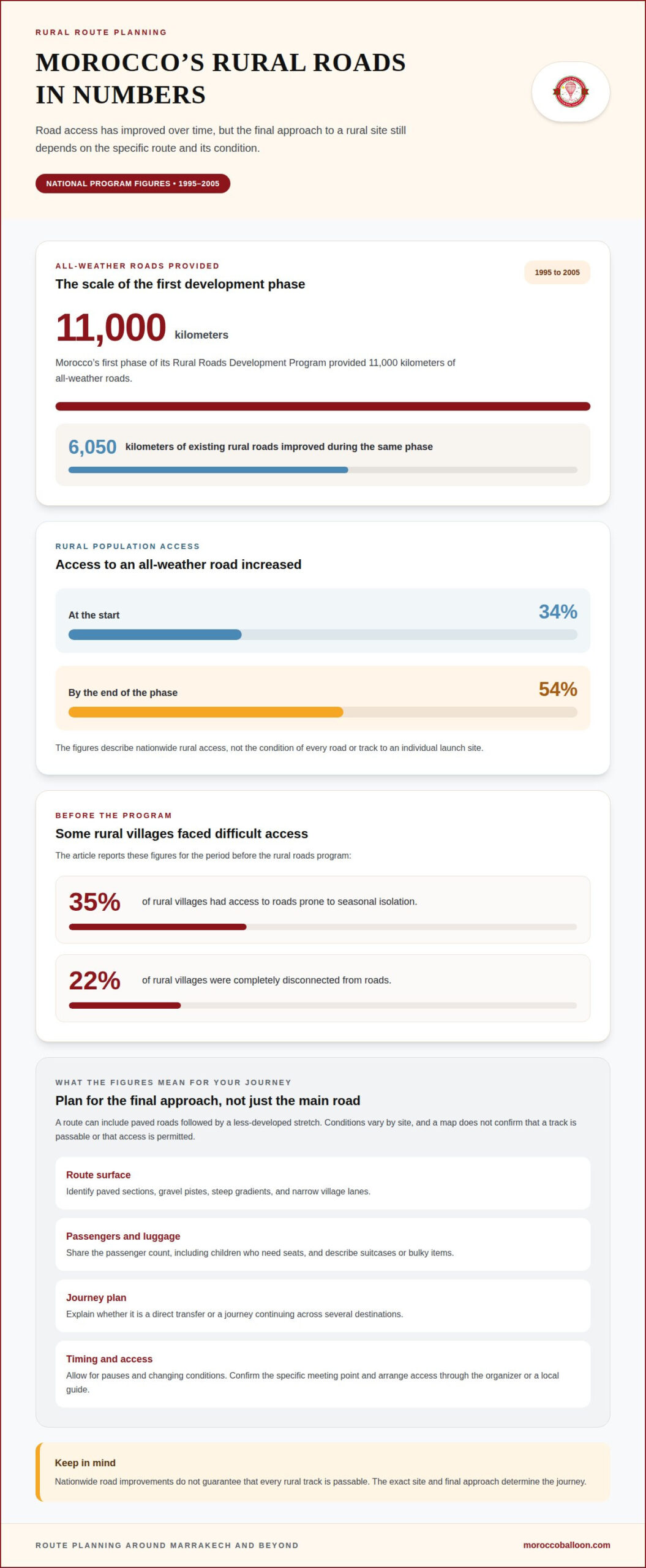
Rural roads have changed over time. Morocco’s first phase of its Rural Roads Development Program provided 11,000 kilometers of all-weather roads between 1995 and 2005, including improvements to 6,050 kilometers of existing rural roads. During that phase, rural population access to an all-weather road increased from 34 percent to 54 percent. These figures describe a nationwide program, not a guarantee that every track to a launch site stays passable.
Road access can vary depending on the route and its condition. Before the rural roads program, 35 percent of rural villages had access to roads prone to seasonal isolation, while 22 percent were completely disconnected from roads. An older guide may also describe a road that has since been improved or rerouted.
For a launch site anywhere in Morocco, distinguish the main road from the final approach. The exact location and route determine the journey. This matters before an early departure, when a detour can disrupt arrival plans. Ask about the route when confirming your booking, and do not assume a rural track is passable just because it appears on a map.
Routes to launch sites may be paved for much of the journey, then become less developed near the site. Mountain approaches can be narrow and winding, and road conditions may vary by route.
Choosing a vehicle for a professional transfer based on terrain, passengers, and luggage
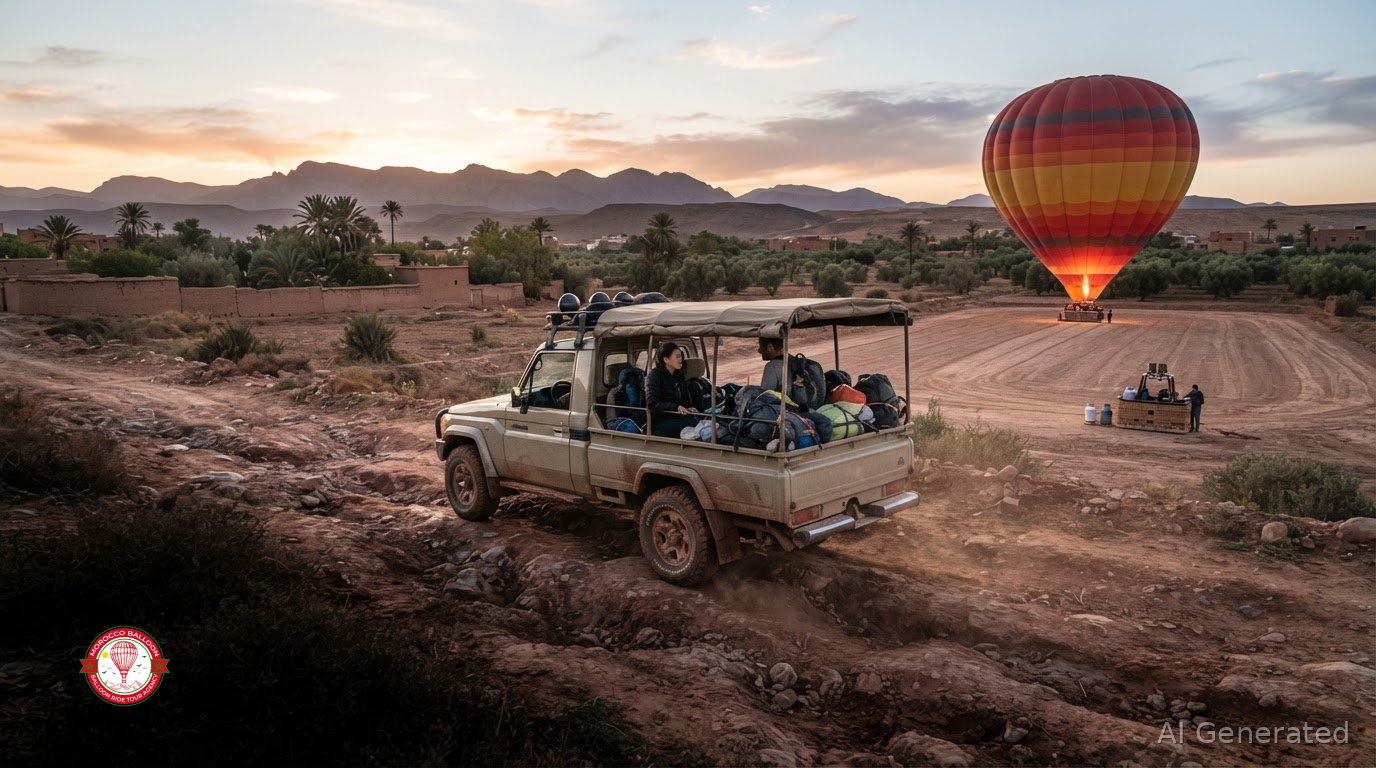
Morocco’s routes range from toll motorways and highways to gravel pistes, so a professional transfer vehicle should match the full route. A paved approach near a coastal destination differs from an Atlas Mountain track with bends and changing elevation. The driver needs the destination, road surface, passenger count, and luggage details before choosing a suitable vehicle. A 4×4 isn’t automatically necessary for every rural journey.
Passenger and luggage needs matter as much as the road. A group with several suitcases needs room for both people and bags without crowding the cabin. Travelers carrying hiking gear may need a different amount of space than a couple with overnight bags. Share your group size, luggage type, and any bulky items when arranging transport. This helps match the vehicle to the whole party, not just the roughest section.
Consider changing road surfaces, not just the destination. A journey toward the Atlas Mountains may follow paved roads before reaching a narrower mountain approach. A coastal itinerary can use major highways between destinations, then turn onto smaller local roads. Travel guides can become outdated as roads are paved, rerouted, or affected by weather, so the route plan should account for the final stretch.
For a professional transfer, choose based on these practical details:
- Terrain: identify paved roads, gravel pistes, steep gradients, and narrow village lanes.
- Passengers: state the number traveling, including children who need seats.
- Luggage: describe suitcases, sports equipment, or other bulky bags.
- Journey shape: explain whether the vehicle makes a direct transfer or continues across several destinations.
That information helps match the vehicle to both comfort and access. For example, traveling between Marrakech and a remote Atlas village calls for a different assessment than a direct coastal highway transfer.
How professional drivers handle Moroccan desert terrain and changing tracks
Southern routes can shift from paved roads to gravel pistes, then open into desert landscapes. Smaller roads also connect isolated valleys and settlements, so a route that looks direct on a map may involve slower, less familiar driving. A professional driver plans for the surface ahead, not just the destination.
Road conditions and access can vary. New roads open, and mountain slopes are sometimes asphalted, making older travel guides inaccurate. Drivers familiar with local routes can adapt when a track changes instead of relying only on a printed description. Share the exact destination and meeting point before departure.
Desert driving calls for measured speed and attention to the surface. Loose sand can reduce traction, while a drift may obscure the firmest part of a track. A driver may slow down, assess the route, and avoid treating an exposed track like a city road. On a trip from Marrakech toward more open southern terrain, the paved sections and the final rural approach require different driving judgments.
Mountain roads bring different challenges. Narrow bends can limit visibility. A professional route plan accounts for access conditions and can change if the route becomes unsuitable. For a remote launch site, arriving safely matters more than pressing on toward a blocked track.
Before setting out, establish the intended route, destination, and a practical alternative approach. Local judgment matters: desert tracks and mountain roads don’t behave like fixed highways. If the final access road is rough or exposed, let the driver assess conditions and adjust the pace. The aim is to reach the site safely, not to force a route that no longer suits the terrain.
Morocco Balloon
Morocco Balloon helps you plan a Marrakech balloon experience, with booking and hotel transfers arranged together. If you’re pairing the flight with another part of your itinerary, options include a city and souks tour or an Atlas Mountain day trip. This is useful when you want the sunrise experience to fit smoothly around your wider plans, rather than organize each element separately.
For a flight over the countryside, our Marrakech hot air balloon flight is a natural place to begin. Morocco Balloon is a registered brand of Barbaro Tours Morocco, which is a licensed tourist transport company with its own fleet of insured vehicles. Share your travel plans and pickup details so the team can help coordinate your booking and transfer.
Contact Morocco Balloon to discuss your plans.
Make the journey part of the experience
When traveling to a launch site on rough rural roads in Morocco, remember that the route is part of the day, not just a way to reach the view. Plan around the landscape and the experience you want, whether that means exploring Marrakech, visiting the Atlas Mountains, or adding an outdoor activity.
Morocco Balloon offers hot-air balloon flights paired with quad biking, a half-day city and souks tour, or an Atlas Mountain day trip. Choose the combination that suits your time and interests, then share your route question with the team as you plan. This can help connect your balloon experience with the rest of your itinerary.
Ask Morocco Balloon about your route, and look forward to a memorable day beneath Morocco’s wide-open skies.
Frequently Asked Questions
Is driving in Morocco dangerous?
Driving in Morocco is not automatically dangerous, but conditions vary between busy cities, mountain roads, and rural tracks. The route and time of day matter: night driving can be harder because some vehicles may travel without lights. On unfamiliar rural roads, a professional driver can handle local route decisions while you focus on the journey. Plan around daylight and don’t expect every road to feel like a highway.
Do rural roads in Morocco require a 4×4 vehicle to reach launch sites?
No, a 4×4 isn’t necessary for every rural road or launch-site approach. The right vehicle depends on the specific route, including its surface, gradients, and condition at the time of travel. A paved road leading close to a site may need a different vehicle from a sandy or uneven track. Share the site location with your transport provider so the vehicle choice reflects the final access route.
How long does it take to drive from Marrakech to nearby balloon launch sites?
There isn’t one reliable drive time for every balloon launch site near Marrakech. The departure point, exact meeting location, road surface, and route used all affect the journey. For an early flight, ask for the planned pickup time and estimated transfer duration as part of your booking details. Keep your schedule flexible enough to account for the rural approach, rather than estimating from city-to-city distance alone.
Are launch-site access roads paved, gravel, sandy, or mountainous?
Access varies by site and may involve paved roads, gravel tracks, sandy stretches, or mountain roads. One route may stay paved until the final approach, while another crosses open desert terrain or follows a winding slope. Even nearby destinations can have different access conditions. Give the driver the precise launch location, not just the nearest town, so the final approach can be planned separately from the main road.
What should you ask a professional transport provider about vehicles, tires, and recovery equipment for rough rural roads in Morocco?
Ask which vehicle is planned for the entire route, including the final stretch, and whether its tires and recovery equipment suit the surface. Clarify how the driver handles a blocked or impassable track and whether there is an alternative approach. Share passenger numbers and bulky luggage details, too. These questions help you understand the transport plan without assuming every rural journey needs specialized equipment.
Can weather affect access to Moroccan launch sites?
Weather conditions may affect access to some launch sites. Check with your transport provider about the planned route and any changes before departure. Road improvements can also change conditions, so an older travel guide may not describe the current approach. For a dawn departure, leave enough flexibility to adapt if access changes.