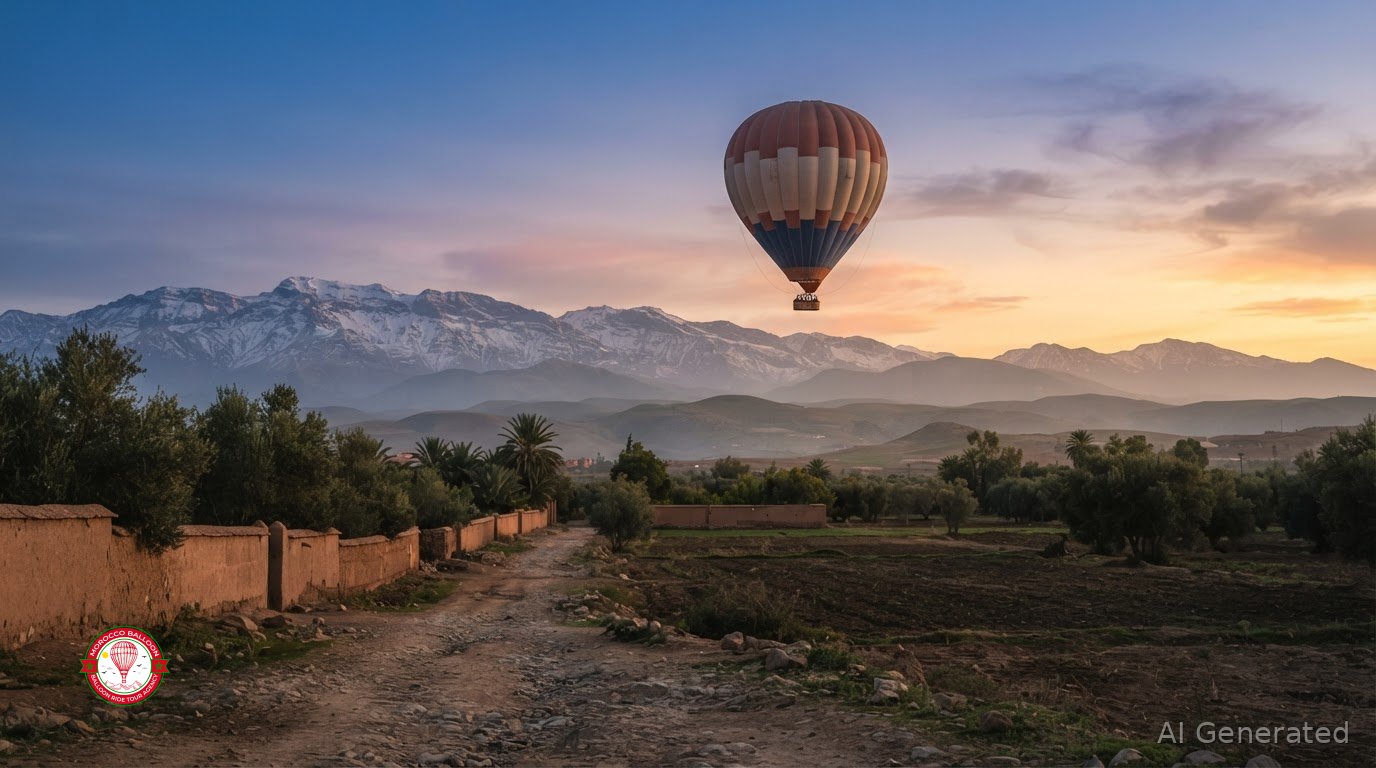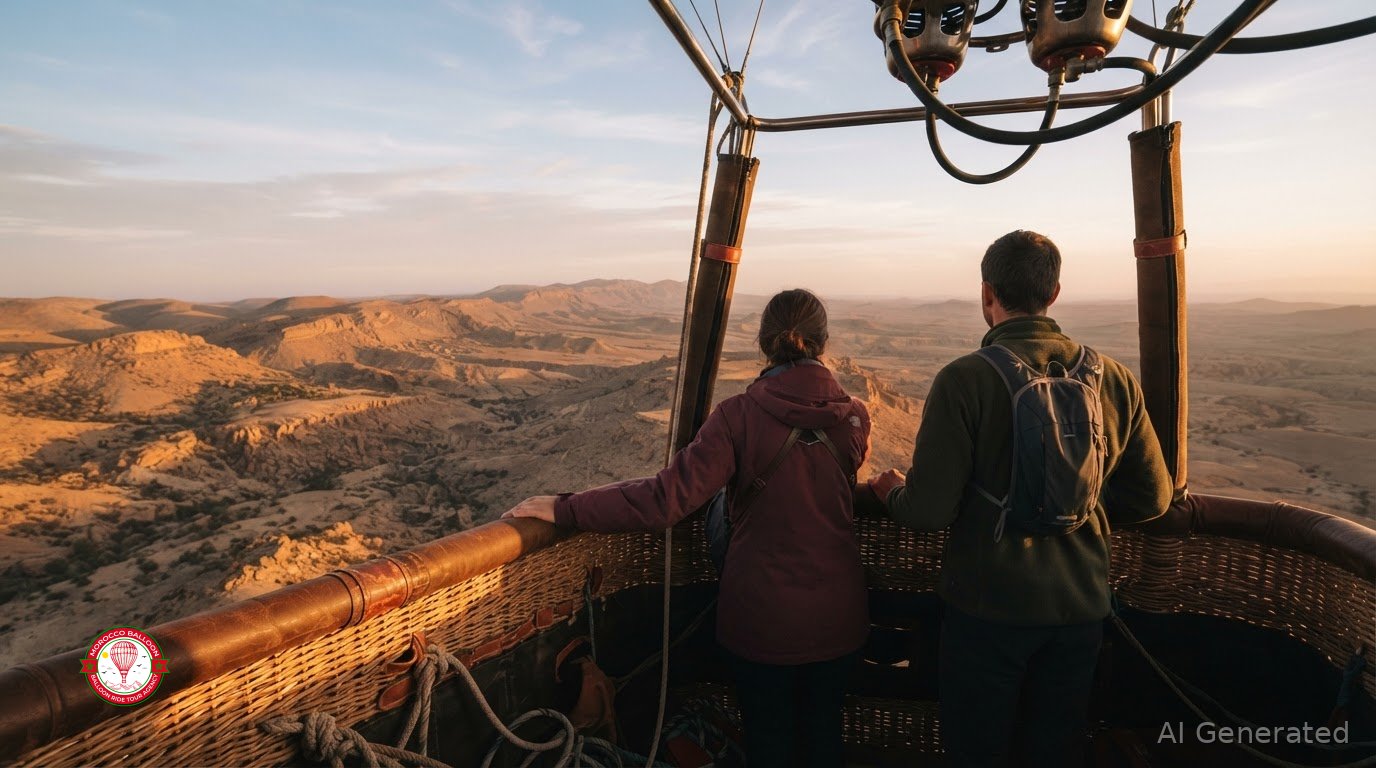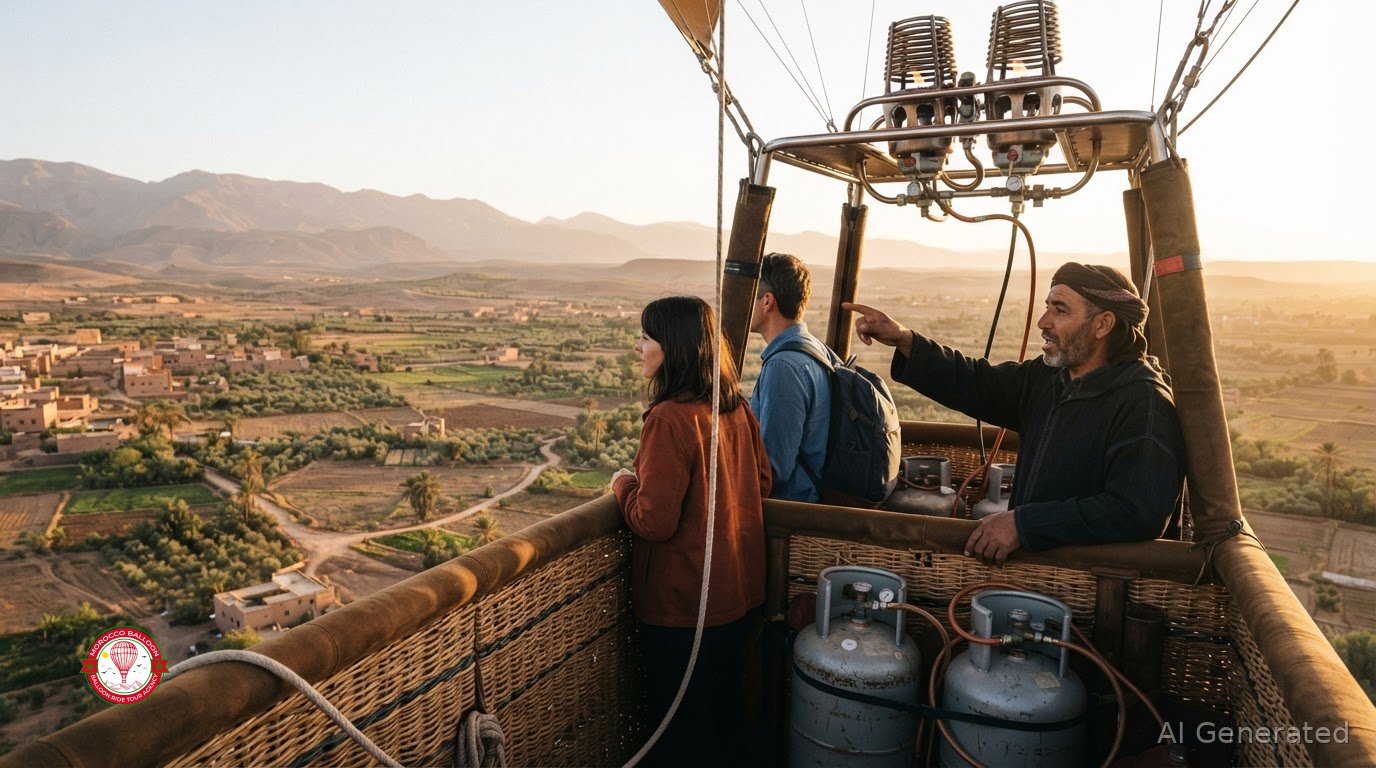
Supporting rural Moroccan communities through balloon tourism depends on whether local families can participate and share in the benefits, not just whether visitors admire the countryside from above. At dawn, a balloon flight offers sweeping views of fields, villages, and distant horizons. Tourism’s lasting value, however, depends on local work, partnerships with rural businesses, and choices that respect community priorities and the landscapes that sustain them.
This article explores how responsible balloon tourism can support rural families through community participation, locally rooted services, and incentives for care and collaboration. It considers where partnerships can make a difference and how thoughtful visitor experiences can balance economic opportunity with respect for culture and place.
Key Takeaways
- Look beyond the balloon ride itself: local guiding, food, crafts, and lodging can create ways for rural families to participate in tourism.
- Understand how responsible-tourism incentives and labels can encourage businesses to support local livelihoods and care for the places visitors come to see.
- Consider how locally rooted tourism can help families through income opportunities while respecting community priorities and traditions.
- Explore why strong partnerships and attention to environmental limits matter when tourism grows around rural communities.
Community-based tourism and local participation
Community-based tourism gives residents a role in shaping visitor experiences and sharing the benefits. In Morocco, balloon tourism can support sustainable development when local participation extends beyond the flight itself.
Community Training and Local Capacity
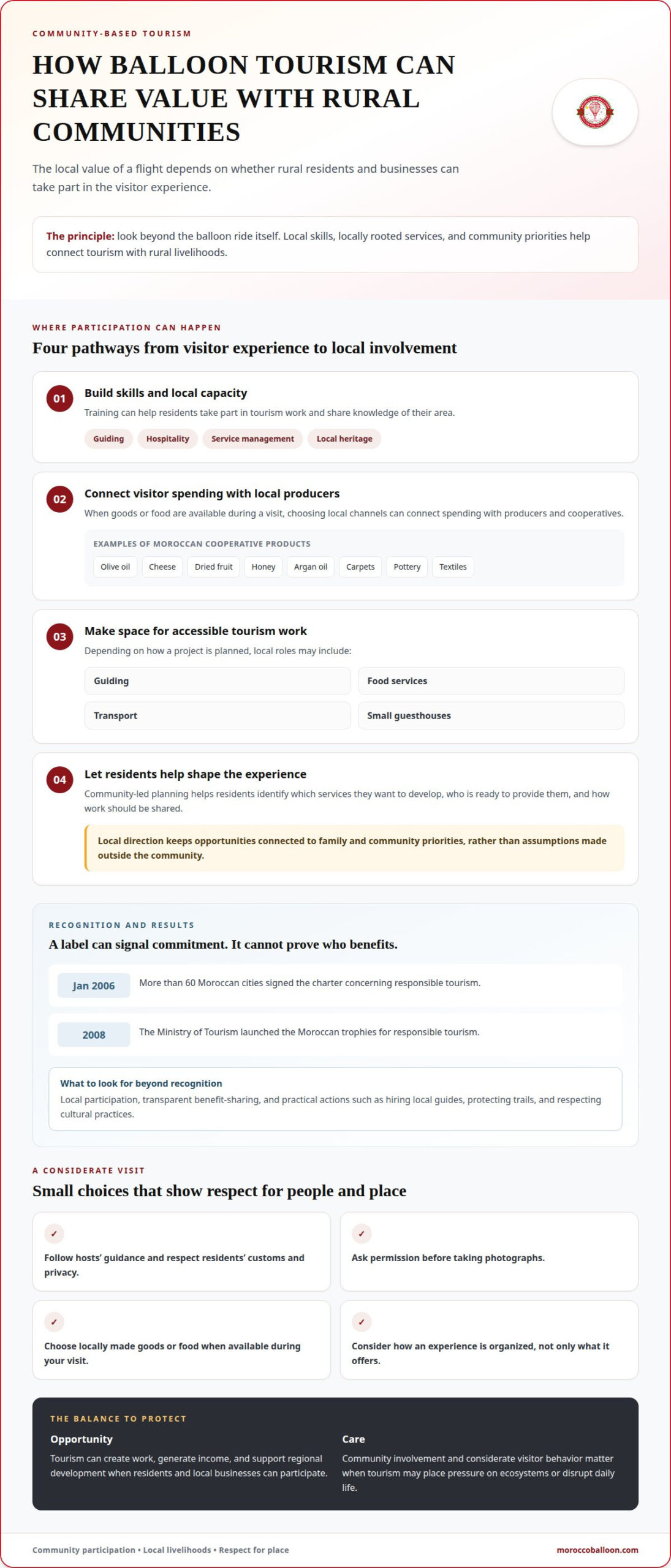
Community training builds local capacity in guiding, hospitality, service management, and local heritage. Knowledgeable hosts can help visitors understand the landscape, while these skills can support ongoing tourism work for rural communities. Training can also help residents plan experiences, welcome guests, and explain local practices, grounding visits in community knowledge.
Sharing Benefits with Local Producers
Benefit-sharing connects tourism spending with local producers, cooperatives, and family businesses. Travelers can choose locally made goods or food when available during a visit. Moroccan cooperatives produce olive oil, cheese, dried fruit, honey, argan oil, carpets, pottery, and textiles. Buying through local channels can connect visitor spending with producers and offer a closer view of regional skills and practices.
Tourism Employment and Rural Livelihoods
Tourism employment can include guiding, food services, transport, and small guesthouses. The OECD notes that tourism can create jobs, generate income, and promote regional development; the United Nations says tourism revenue can boost employment and help address poverty. Balloon tourism differs from community-led treks or village stays. Its local value depends on whether residents and businesses participate in the visitor experience.
For balloon flights in Morocco, relevant safety considerations include licensed pilots and established safety protocols; specific permit requirements should not be inferred from these facts. There is no single price or revenue-sharing model: local benefits depend on which workers and producers participate. Balloon experiences bring visitors over the landscapes where flights operate, while rural tourism also includes activities such as guided walks and family stays. Travelers can choose tours connected with local services and respect residents’ customs and privacy. Environmental and cultural risks include pressure on ecosystems and disruption to daily life, so community involvement and considerate visitor behavior matter.
Responsible-tourism incentives and labels
In Morocco, responsible-tourism initiatives give businesses and destinations a way to express commitment to sustainability and cultural heritage. More than 60 cities signed the charter concerning responsible tourism in January 2006, showing that the idea reached destinations across the country.
The Ministry of Tourism launched the Moroccan trophies for responsible tourism in 2008. Recognition can make responsible practices more visible across the sector and help travelers consider what a destination values beyond its scenery. A label or award is a signal, not proof that tourism income reaches nearby households or that residents shape decisions. Community participation and transparent benefit-sharing remain useful measures of meaningful commitment.
Incentives are most useful when they encourage practical actions, such as hiring local guides, protecting trails, and respecting cultural practices. Travelers can consider how an experience is organized, not just what it offers. Buying goods made by local cooperatives can connect tourism spending with producers and give visitors a closer view of regional skills. These choices put responsible-tourism principles into practice.
Responsible tourism asks businesses to consider environmental and social effects, not just visitor satisfaction. Balloon experiences introduce travelers to rural landscapes, so thoughtful planning should respect residents’ privacy and avoid unnecessary pressure on local resources. Visitors can contribute by following hosts’ guidance and asking permission before taking photographs. These choices make broader commitments meaningful through considerate behavior on the ground. Sustainable tourism links recognition with actions that benefit communities and help preserve the places visitors come to discover.
Over roughly the last fifteen years, tourism policy discussions and practice in Morocco have increasingly acknowledged sustainable tourism. This growing recognition places sustainability in both how tourism is discussed and how it is practiced. Responsible-tourism incentives can reinforce that direction by treating sustainability as more than a label. This emphasis connects practical commitments with the broader evolution of tourism policy and practice.
Support for rural families
Supporting rural Moroccan communities through balloon tourism can make a difference where households face limited economic opportunities, youth migration, and environmental pressures. The benefit is not simply visitor spending, but whether tourism creates work residents can access and sustain. Local people may contribute through guiding, transport, food services, or guesthouse work, depending on how each tourism project is planned.
Family benefits can also come from work that builds skills for future employment. Training in service management and local heritage can help residents take on guest-facing roles and explain their own area with confidence. For rural households, these skills may apply beyond a single tour, supporting broader participation in tourism and regional development.
Community-led projects can make the link between visitor activity and household needs clearer. Residents can identify which services they want to develop, who is ready to provide them, and how work should be shared. Local direction helps keep opportunities relevant to families instead of building projects around assumptions made outside the community.
Supporting rural Moroccan communities through balloon tourism also means considering the pressures growth can bring. If visitor activity strains local resources or disrupts daily routines, short-term income may come at a cost to residents. Community participation in planning can help balance economic opportunities with environmental care and local priorities.
For travelers, a useful principle is to value experiences shaped with residents, not simply those that pass through rural areas. Ask how a visit connects with local work, follow hosts’ guidance, and respect community boundaries. When tourism projects create roles that families can influence and benefit from, balloon travel can contribute to livelihoods while leaving residents room to shape what development means for them.
Alternative tourism principles and community partnership
Alternative tourism works best when community priorities guide visitor experiences, rather than visitor demand alone. Tourism promotion should match a destination’s carrying capacity by considering local resources, residents’ daily needs, and the scale of activities before encouraging growth. The principle matters for balloon tourism: a memorable view should not come at the expense of the places and communities below.
Partnerships can help put that balance into practice. Giving residents a role in setting priorities and reviewing tourism initiatives can help keep development responsive to local needs. Visitors can support this approach by following local guidance, respecting private spaces, and choosing experiences that do not treat traditions as performances on demand.
Environmental care also benefits from local involvement. Communities in Morocco can help maintain hiking trails, protect ecosystems, and promote responsible tourism. These actions connect conservation with livelihoods: well-kept trails support outdoor discovery, while protected habitats preserve resources residents depend on. Tourism planning should weigh these effects alongside income and employment, particularly where several activities share the same landscape.
For a partnership to last, responsibilities need to be clear. Local residents can help identify sensitive areas, suitable visitor routes, and cultural practices that require care. Tourism businesses can then shape visits around those priorities and explain respectful behavior before guests arrive. Collaboration helps communities guide development while keeping preservation central.
For a mountain-focused visit, discover an Atlas Mountains experience with local priorities and landscape preservation in mind.
Morocco Balloon
We pair balloon flights with experiences on the ground, bringing landscapes and local culture into a fuller visit. We offer a Marrakech City and Souks Tour with Hot Air Balloon Ride Half Day or an Atlas Mountain day trip. For a more active outing, choose a balloon experience with quad biking, or quad biking and a camel ride.
These combinations offer ways to shape an itinerary around the places and activities you want to experience. They do not, by themselves, establish how tourism benefits a rural family, so community participation and local partnerships remain important when considering tourism’s impact.
For help choosing an experience that fits your Marrakech plans, contact us.
Let Your Marrakech Journey Make Room for Local Connections
Supporting rural Moroccan communities through balloon tourism means looking beyond the horizon and making space for meaningful experiences on the ground. As you plan your wider Moroccan travels and city stays, consider how your journey can connect you with local places and traditions, while leaving room for residents to guide the experience on their own terms.
Morocco Balloon offers a Hot Air Balloon Flight and Quad Biking, a Marrakech City and Souks Tour with Hot Air Balloon Ride Half Day, and a Hot Air Balloon Experience and Atlas Mountain Day Trip. These options bring together sunrise views and time to explore. The team’s local knowledge can put the surrounding landscapes into context as your adventure unfolds.
Your next step can be simple: share what kind of journey you’re hoping for, whether that means mountain scenery, souk exploration, or outdoor adventure. Contact Morocco Balloon to discuss your plans, then look forward to experiencing the country from a fresh perspective.
Frequently Asked Questions
How many local jobs does balloon tourism create in rural Morocco?
There is no single reliable job count for rural Morocco. Employment depends on the route, visitor volume, and whether local residents take paid roles in guiding, transport, food, or accommodation. A balloon trip may create direct work for its flight team and indirect opportunities nearby, but the totals vary by location and how the experience is organized.
What share of balloon-tourism revenue stays in local communities?
There is no single revenue share across balloon tourism in Morocco. The amount retained locally depends on who provides services and where the business spends its operating budget. Local purchasing, paid guiding, and referrals to rural guesthouses can direct more spending to residents. To assess a tourism project, identify which local suppliers and workers receive business.
How do Moroccan balloon operators partner with local guides, farms, and guesthouses?
Partnerships can connect balloon trips with paid local guiding, food from nearby farms, or accommodation referrals to rural guesthouses. Operators and community partners can agree on roles, service standards, payment arrangements, and how guests are introduced to local customs. These are practical partnership models, not claims that every operator uses them. Clear communication helps residents shape the visitor experience and understand how work is shared.
What examples show balloon tourism improving livelihoods in rural Morocco?
Published examples of rural tourism in Morocco show how visitor activity can support livelihoods, though they do not establish balloon-specific outcomes. In Imlil, rural tourism initiatives are associated with local development and preservation. In the High Atlas, stays with Amazigh families can create income through hosting meals and sharing knowledge. These examples illustrate possible community benefits, not measured results from balloon tourism itself.