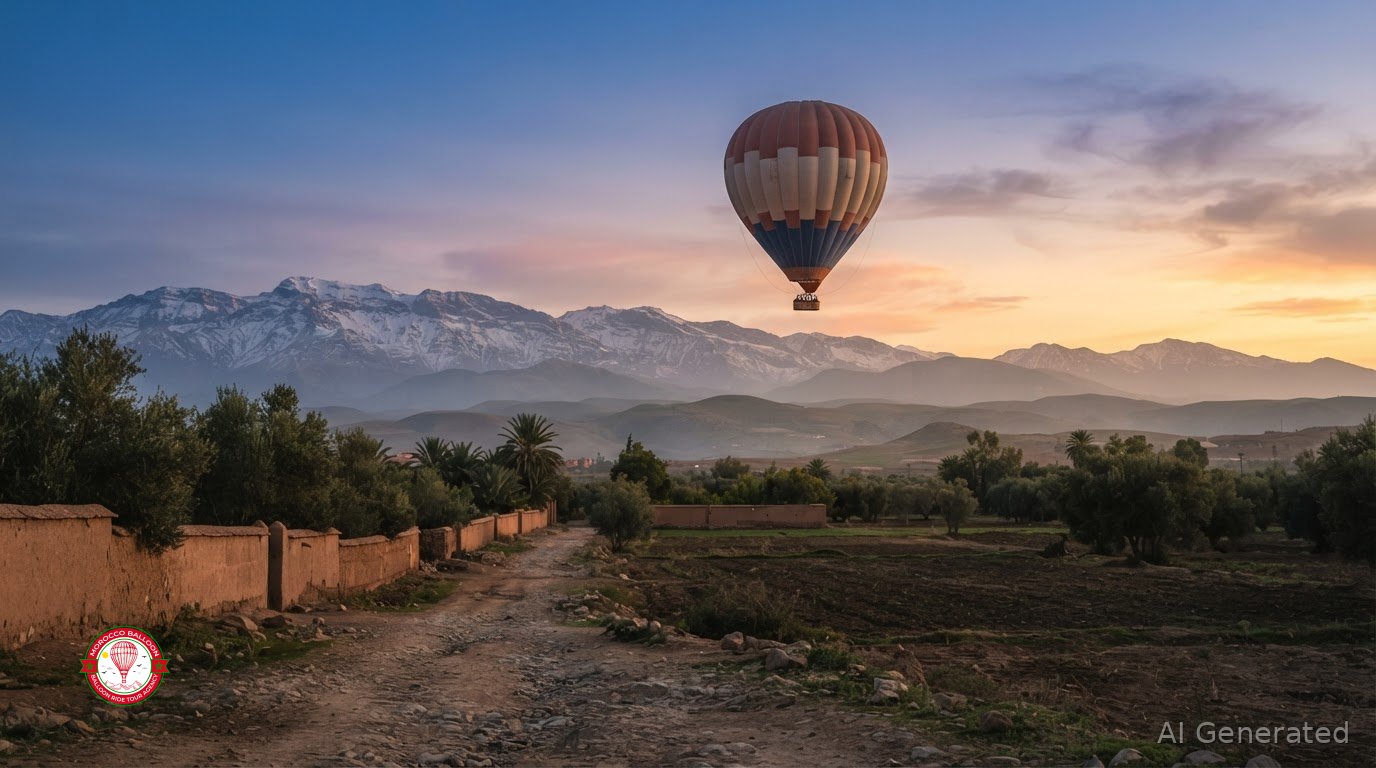
At dawn, blue hour comes before sunrise. As the sun rises, golden hour brings the sunrise horizon colors over the Atlas Mountains from cool blues to warm gold. Timing shifts with the season and location, so winter mornings offer changing light rather than a fixed schedule.
You may picture the peaks glowing first while the valleys remain quiet below. This guide explains how blue and golden hour shape the view, why winter light changes the colors, and what to consider when choosing a dawn experience over the Atlas Mountains.
Key Takeaways
- Use blue hour for cooler dawn tones, then watch the first sunlight bring warmer color to the peaks.
- In winter, look for golden light on snow-capped summits while the valleys remain in shadow.
- Expect the sunrise palette to shift with the weather, elevation, and changing light across the mountain slopes.
- Consider Imlil or a mountain trail for a land-based viewpoint, or pair a balloon flight with an Atlas Mountains day trip.
1. Golden hour and blue hour timing
Before sunrise, blue hour lays cool tones across the Atlas horizon. It is the twilight before the sun appears, when the sky begins to brighten but the landscape remains dim. Golden hour follows sunrise, as low sunlight reaches the ridges and valleys at a warm, slanting angle. The transition is gradual, so watch the sky and peaks rather than relying on a single exact clock time. Season and location affect when daylight arrives in Marrakech and the mountains.
For a sunrise near the Atlas Mountains, choose an open view toward the eastern horizon. Imlil, near Mount Toubkal, and mountain trails can offer dawn viewpoints. Arrive before first light to let your eyes adjust and notice the blue tones before sunlight reaches the peaks. Choose a safe, open spot with a clear view.
Sunset timing offers a useful contrast, but it shouldn’t be mistaken for sunrise. Moroccan winter sunsets occur at around 5:00 PM. In Marrakech, arrive 30 to 45 minutes before sunset to enjoy the changing light. The most vivid sunset colors often appear before and just after the sun disappears. At sunset, Atlas slopes can take on red and purple shades.
For photography, golden hour just before sunset is a good time to shoot at Volubilis. A medium aperture such as f/8 is suggested for sunset photography in Marrakech. Include a recognizable feature, such as palm trees, minarets, rooftop lanterns, arches, or the Atlas Mountains, to give the frame a clear sense of place. Weather shapes the view, so clouds can soften the light or obscure the horizon. At sunrise, keep watching as the first direct light moves from high ridges toward lower slopes.
The travelers visited Morocco in December, when the sun set early, so timing the day’s available light mattered. The distinction between blue hour and golden hour remains useful: arrive while the sky is changing, then watch direct light reach the peaks. Keep sunset observations separate from sunrise plans, and use the local horizon and changing illumination, not a fixed clock time, to judge the transition.
2. Winter light across the Atlas Mountains
In Morocco’s High Atlas, winter sunrise can gild snow-capped peaks while valleys below remain shaded. Pale snow catches the first direct light as lower slopes stay darker. As the sun climbs, warm tones spread across the ridges and the valley gradually brightens. Clouds, haze, and the direction of the open horizon affect how clearly these layers appear.
High Atlas and Anti-Atlas sunrise views differ in the terrain they reveal. In winter, the High Atlas can show snow-covered summits above shadowed valleys. The Anti-Atlas has a different profile, so you should not expect the same snowy contrast. In either range, the view depends on the outlook and morning conditions.
Visit in winter for the possibility of snow on the High Atlas, but clear views depend on that morning’s weather. A date alone cannot promise a cloud-free horizon. Check the sky before setting out, and allow time to watch the light change as it reaches the peaks.
Access rules vary between Atlas Mountain parks and trails. Follow posted signs and local instructions at the entrance or trailhead, and stay on permitted paths. Before a sunrise hike, identify the route and starting point so you are not searching for the trail in darkness.
Hiking time depends on the viewpoint, route length, elevation gain, and walking pace. An Imlil trail may take longer or less time than a nearby lower viewpoint, so plan for the specific route rather than assuming a standard duration. Leave enough time to reach your chosen outlook before dawn.
For an Atlas sunrise hike, bring sturdy shoes, warm layers, water, and a charged phone or camera. A headlamp helps you see the path before daylight, and an extra layer can make waiting on an exposed ridge more comfortable. Pack essentials the evening before and keep your route instructions accessible.
Winter is the best season for snow-bright High Atlas sunrise views, but no particular month guarantees clear skies; visibility depends on the morning weather.

3. What colors appear at sunrise over the Atlas Mountains?
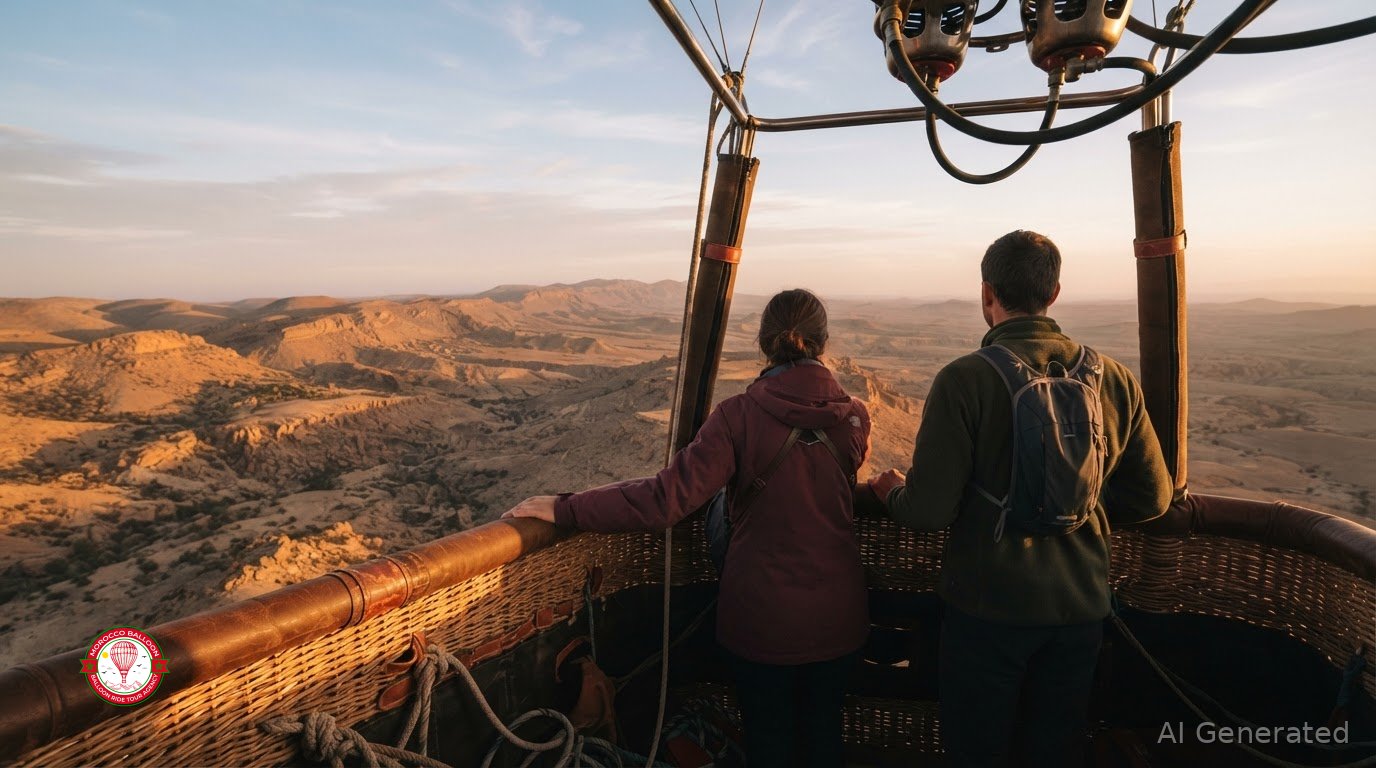
Before sunrise, the Atlas horizon may appear deep blue, with darker mountain shapes against a paling sky. As dawn advances, the eastern edge can shift through muted violet and pink before direct sunlight reaches the ridges. Once the sun clears the horizon, warm gold and orange tones may spread across exposed slopes. The sunrise horizon colors over the Atlas Mountains shift gradually, so keep watching the skyline through the transition.
In the High Atlas, winter snow adds bright contrast to warm sunrise tones. Snow-capped peaks can catch golden light while valleys remain in shadow, making the ridgelines stand out. Rocky slopes may look muted beside illuminated snow, then grow warmer as sunlight reaches lower terrain. A view toward Mount Toubkal can reveal this layered effect when clouds leave the summit visible.
The atmosphere also shapes the palette. Thin cloud can soften the edge between pink and gold, while heavier cloud may mute the sunrise or hide the peaks. Clear air often makes the boundary between lit ridges and shaded valleys easier to see. In the Atlas Mountains, weather changes the view, so the same lookout can show different colors on separate mornings.
To notice the full color sequence, frame both sky and landscape from an open viewpoint near Imlil. Watch how the horizon brightens first, then compare its color with the mountain faces as sunlight advances. A narrow sky-only composition can miss the contrast that makes the Atlas scene distinctive. Including a dark ridge in the foreground helps reveal subtle changes from blue twilight to warmer dawn. The sunrise horizon colors over the Atlas Mountains become more vivid in context, as sky, snow, rock, and shadow change together. If clouds gather above one summit, shift your attention to another visible ridge rather than waiting for one peak to clear.
At sunset in Morocco’s Atlas Mountains, the mountains can appear in shades of red and purple. These tones belong to the evening view, giving the range a different color character from the changing light of sunrise. Red and purple identify the possible sunset appearance of the mountains, while dawn remains associated with its own progression of colors across sky and terrain.
4. Which Atlas Mountain locations offer the best sunrise horizon views?
Imlil is a useful starting point for a sunrise view near Mount Toubkal. The village sits in the Atlas Mountains, where the surrounding terrain offers several possible outlooks. Choose a viewpoint with an open horizon rather than one where nearby slopes block the sky. A clear view lets you follow first light across the skyline and notice the ridges change as dawn advances.
A mountain trail can also provide a sunrise vantage point, especially where it opens onto a broad view. The best choice depends on the route and direction of the outlook, not simply its elevation. Study the trail before setting out and identify a spot where the horizon and mountain profile remain visible. For a relaxed viewing stop, prioritize an accessible approach over a distant summit.
Agafay offers views toward the Atlas Mountains from outside Marrakech. It is not an Atlas Mountain trail, but its open setting can bring the range into view across the landscape. This option suits visitors who want to see the mountains without choosing a mountain path. Plan transportation ahead, especially when timing your arrival around dawn.
Match your location to the scene you want. Imlil brings you close to the High Atlas and Mount Toubkal, while a trail offers a changing perspective as the terrain opens. Agafay provides a more distant view toward the range. Check conditions before setting out, as visibility may vary.
Before choosing, compare the route, the openness of the view, and how easily you can reach the viewpoint before sunrise. In Imlil, a trail facing an unobstructed skyline may suit photography better than a sheltered spot. Around Agafay, check that the Atlas horizon is visible from your chosen location. Keep the plan simple: choose one viewpoint, allow time to settle in, and watch daylight spread over the mountains.
Our Hot Air Balloon Experience and Atlas Mountain Day Trip
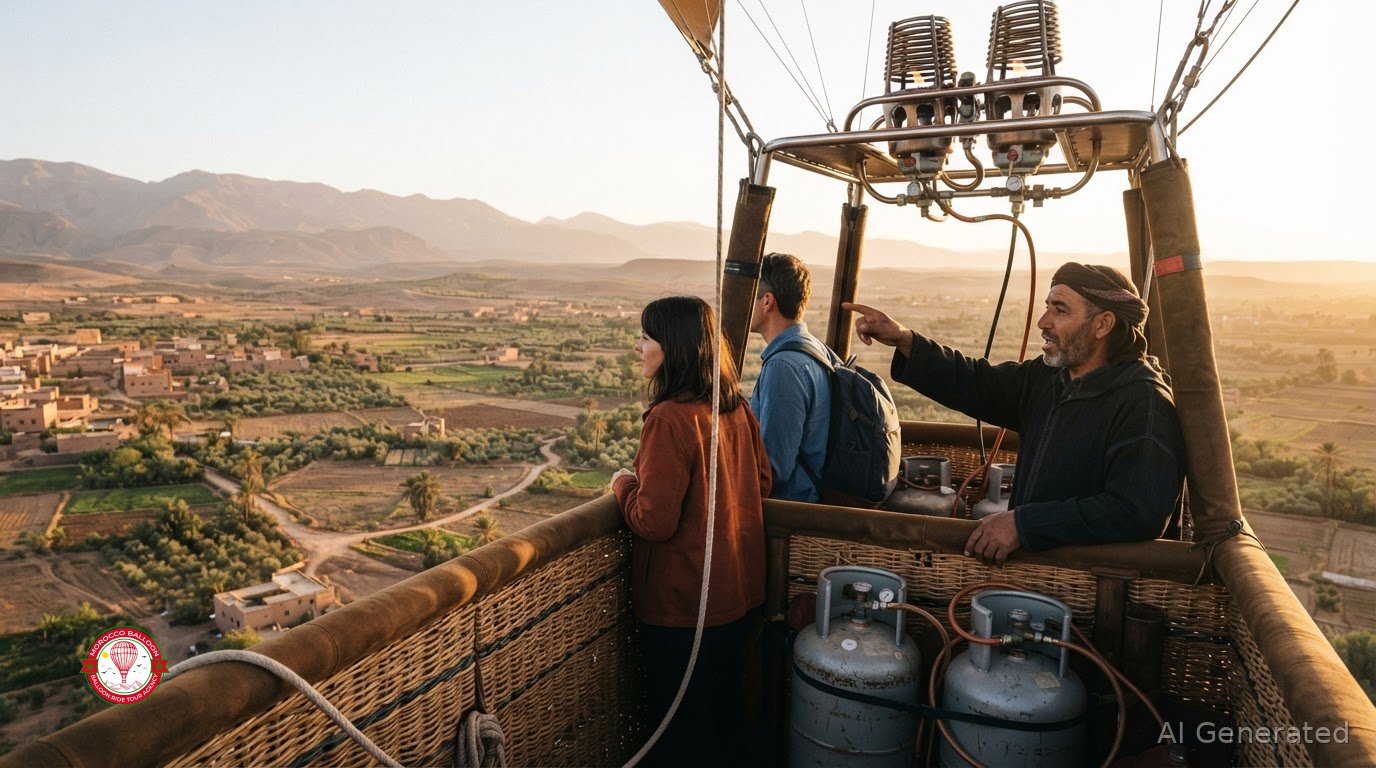
Our Hot Air Balloon Experience and Atlas Mountain Day Trip pairs a sunrise flight with time among the Atlas landscapes. From above, you can watch dawn light spread across the countryside; later, a mountain visit brings you closer to the terrain and its changing viewpoints. Our certified and licensed Atlas tour guides help you experience the region beyond its distant skyline.
A balloon flight paired with an Atlas Mountain day trip suits you if you want an aerial perspective as well as time among the mountains. It can also help you connect a sunrise flight and an Atlas outing in one experience, rather than planning them separately.
For questions about planning your Atlas day, contact us.
Choose the sunrise experience that fits your Marrakech plans
The sunrise horizon colors over the Atlas Mountains can make an early start feel deeply rewarding. As you plan your morning, think about whether you want to linger over the landscape, explore at your own pace, or continue into Marrakech afterward. Our nationwide expertise can help you consider how the day’s rhythm fits your broader itinerary across the country.
Choose the kind of morning that feels right for your visit, then let the rest of the day unfold from there. A calm start can lead into city streets, mountain scenery, or time outdoors.
When you’re ready to discuss your plans with Morocco Balloon, contact us. May your Marrakech morning begin beneath a beautiful sky and lead to a day of discovery.
Frequently Asked Questions
What are the best months for clear sunrise views in the Atlas Mountains?
Clear views cannot be guaranteed in any month. Visibility depends on conditions on the morning of your flight, and our team follows strict weather procedures.
What time is sunrise over the Atlas Mountains by season?
Sunrise timing shifts with the season and location, so there is no fixed clock time. Blue hour comes before sunrise, and golden hour follows as sunlight reaches the ridges and valleys.