Hot air balloon basket partitions for passenger balance divide the basket into passenger spaces and can help distribute people around it, but partitions alone don’t determine balance. Passenger positions, basket capacity, and flight configuration all matter: shared group layouts and private compartments shape how people stand and share space, while understanding these differences helps you picture the basket before a sunrise flight over Morocco’s countryside. This guide explains what partitions do, how capacity and configuration influence passenger space, and why distribution matters during flight, so you can consider the differences between shared and private arrangements as you plan your experience.
Key Takeaways
- Basket layouts may include partitions to separate passengers.
- Consider how a layout affects access to the basket rim, especially if you hope to enjoy open views or take photographs.
- Ask at booking about the basket materials and their properties.
- Understanding how shared and private layouts differ can help you choose a Marrakech flight experience that feels right for your group.
Basket capacity and internal dimensions
Basket capacity and internal dimensions describe different aspects of the passenger experience. The layout shapes how passengers stand and share space, but details about the basket used for your flight should be confirmed at booking.
Basket materials and their properties are not confirmed here. For passengers, the practical question is how the pilot assigns positions in the basket used for the flight.
Basket Shapes and Passenger Capacity
Basket shape is the outline of the passenger area, while capacity is the number of passengers assigned to it. These are related design considerations, but shape alone does not reveal how many people will fly or how much space each person has. Treat each basket’s layout as specific to that flight rather than inferring its capacity from its appearance.
Compartment Sizes and Capacities
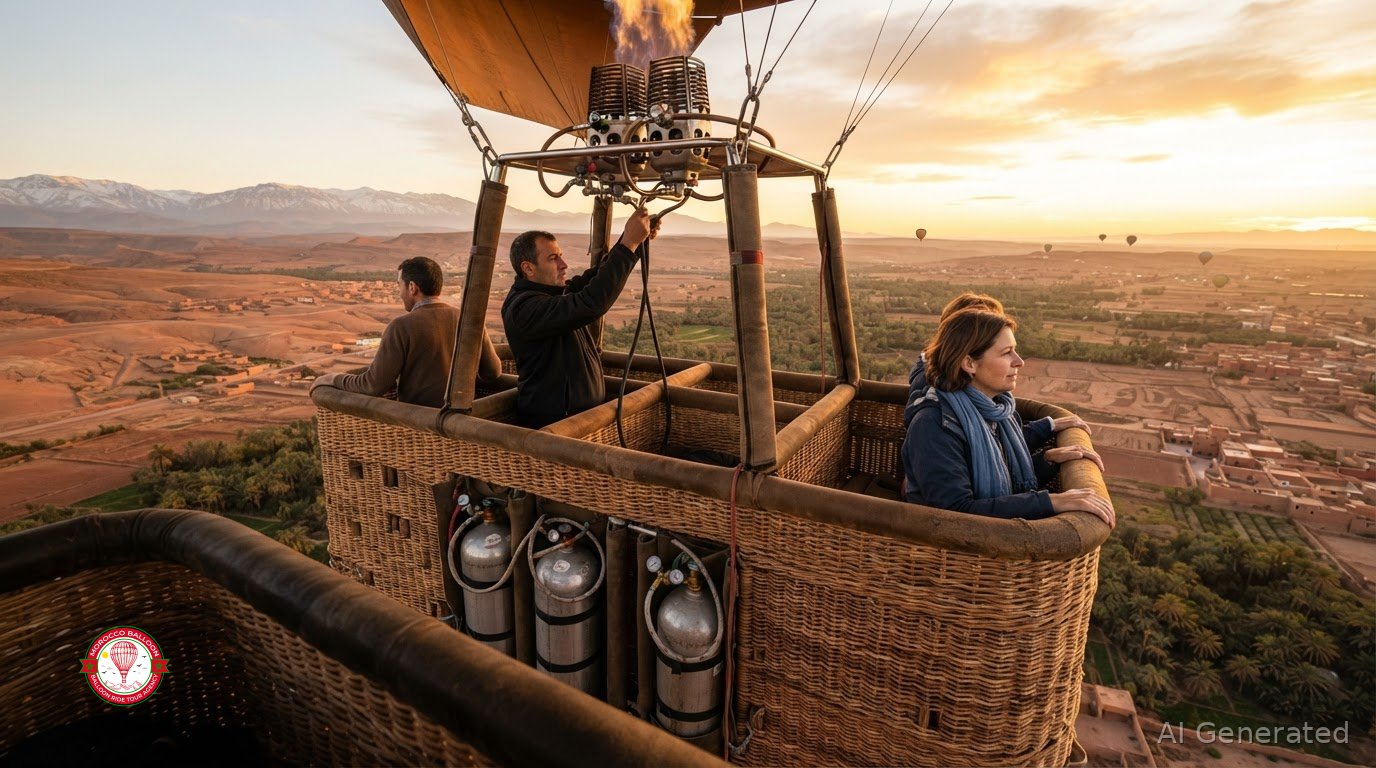
A compartment is a section of the basket separated by an internal partition. Its size and passenger arrangement depend on the basket’s configuration; a divider alone does not establish a standard capacity. Compartments organize where passengers stand. The pilot’s instructions explain how to use the assigned space during the flight.
Internal dimensions affect how passengers share the standing area, but capacity alone cannot describe how that space feels. The basket’s shape, partition placement, and passenger arrangement all matter. For example, two baskets with the same total capacity may have different compartment layouts, so the passenger count alone does not tell you about access or separation.
When picturing a balloon ride, separate three things: the basket’s material, its total passenger capacity, and its internal layout. The material does not determine passenger balance. The pilot directs passenger placement for each flight, so follow their instructions on where to stand as the scenery opens below.
Basket configurations for private and group flights
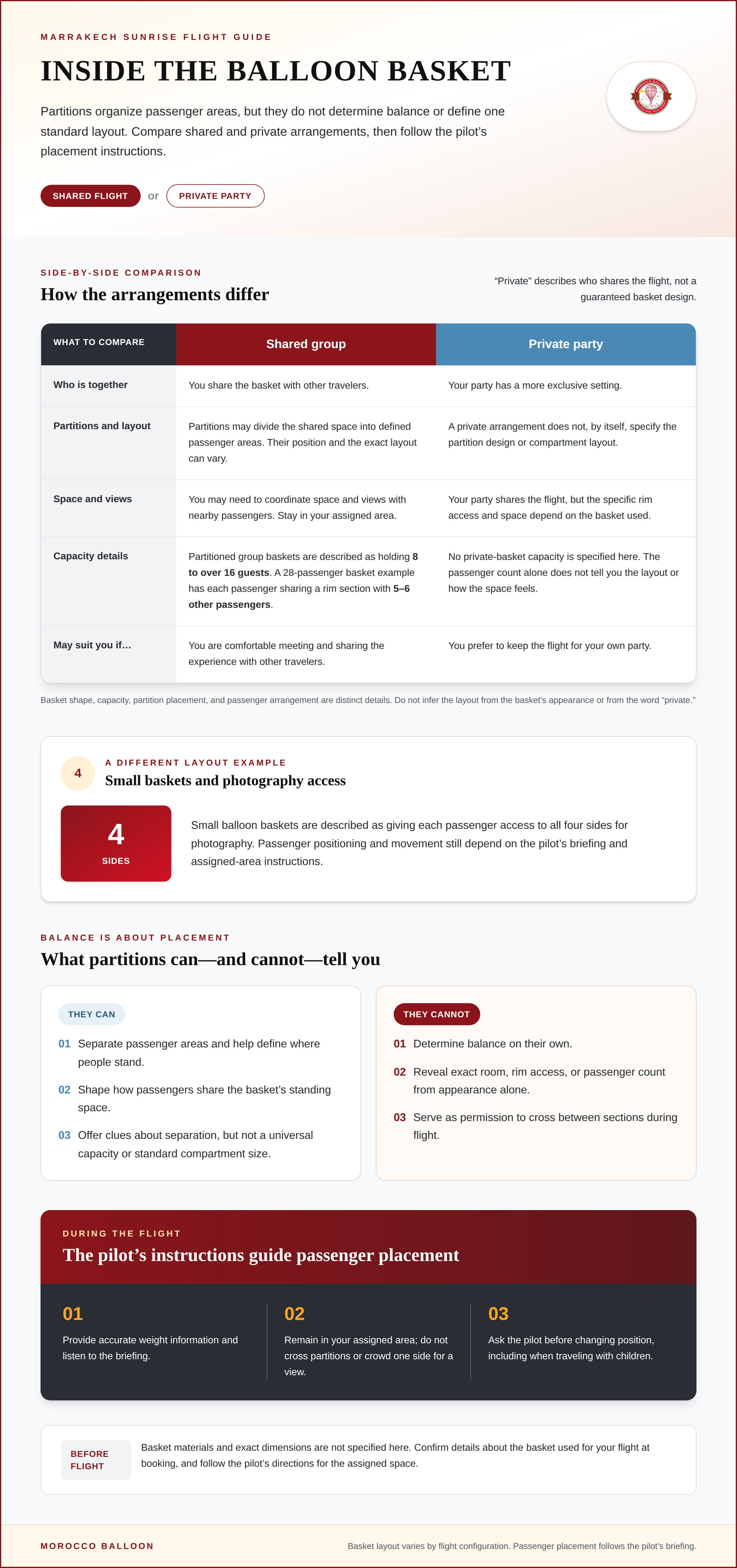
A private basket configuration offers one party a more exclusive setting, while a group configuration places passengers from different parties together. This affects how you share the basket and experience the flight, but “private” alone does not describe a particular partition design. The layout depends on the flight configuration.
In a group configuration, passengers share the basket with other travelers. Partitions may divide the space into sections, giving passengers defined areas rather than one undivided standing space. The presence and position of dividers shape how the basket is shared, but do not reveal the exact layout or room around each person.
A private arrangement changes who shares the basket, not necessarily how it is built. A party traveling together may prefer a more exclusive setting, while a shared flight may suit travelers who are comfortable meeting others. In either configuration, follow the pilot’s directions about where to stand and when to move.
Consider your priorities before choosing: would you rather share the experience with other travelers or keep the flight for your own party? If photography matters, a shared arrangement may require you to coordinate space and views with nearby passengers. Either way, stay in your assigned area and avoid shifting everyone toward one side for the same view.
Partitions organize passenger areas; they are not an invitation to cross between them during flight. The pilot’s briefing explains the basket’s arrangement and where passengers should remain. Listen before takeoff and follow those directions throughout the flight. This keeps movement orderly without assuming every private or group basket has the same layout.
Group baskets with partitions are described as holding 8 to over 16 guests, so capacity can vary between arrangements. In a 28-passenger balloon basket, passengers share their rim section with 5-6 other passengers. Small balloon baskets are described as giving each passenger access to all four sides of the basket for photography. That access may be useful to consider when choosing a flight, while remembering that passenger positioning and movement still depend on the pilot’s briefing and assigned-area instructions.
Internal partitions and passenger separation
Internal partitions separate passenger areas. They also shape where you stand and how your weight is distributed.
Passenger Placement
Partitions may divide passenger areas. A partition alone does not establish a universal seating or compartment-assignment rule. Passengers generally stand during flight, so follow the pilot’s briefing about your assigned position. That guidance helps you understand where to remain without treating every basket layout as identical.
For children, follow the pilot’s placement instructions, just as the rest of the group does. Stay within the assigned area rather than choosing a position based only on the view.
Weight Distribution and Center of Gravity
Weight distribution describes how passengers and their weight are positioned around the basket; the center of gravity reflects the combined load. The pilot assesses passenger weights and positions alongside the balloon’s operating limits. Compartment count alone cannot provide a reliable passenger-side formula for calculating the center of gravity. Provide accurate weight information and follow the pilot’s placement instructions.
Risks of Uneven Loading and Crossing
Uneven loading can shift weight toward one side, and crossing a partition changes where that weight sits. If several passengers move together toward one rim to photograph a view, they may concentrate the load there. Partitions separate sections; they do not permit climbing over or moving between compartments.
During the flight, stay in your assigned space and ask the pilot before changing position. This matters for families too: a child moving across a divider changes the group’s arrangement. The pilot’s instructions coordinate passenger movement and help prevent crowding in one section.
What are typical hot air balloon basket compartment sizes and passenger capacities?
There is no single compartment size for every balloon basket. The interior arrangement depends on the basket’s design, passenger capacity, and divider placement. A compartment is a defined standing area, not necessarily a private cabin, so consider both the number of spaces and how passengers share them.
Capacity describes the total number of passengers a basket is designed to carry. Compartment capacity describes how many people share one section. These figures answer different questions: the first indicates the overall group size, while the second helps you picture the space around you and nearby passengers.
Partitions can create several passenger sections within one basket, but their number and size vary by design. A divider may separate adjacent groups while leaving them to share a common rim area. This affects where passengers stand, how they face the view, and how they move within their assigned space.
Passenger count also affects the room available to each person. Occupants share the basket’s usable area, so a larger total capacity does not automatically mean more personal space. How it feels depends on the interior shape and how the partitions divide the area.
When considering a flight, focus on how the arrangement works in practice: where passengers stand, whether sections are shared, and how the pilot directs movement. A compartment boundary can organize passenger positions, but it does not tell you the exact dimensions or promise a particular amount of room.
For a group traveling together, these distinctions can help set expectations before boarding. The pilot’s instructions explain the assigned positions for that flight, while the basket’s actual layout determines how passengers share the space. Follow those directions rather than assuming a compartment count means every section is identical.
In Cappadocia, commercial balloon compartments are designed for 4-8 passengers each. A 28-passenger basket has 4-5 compartments of 6-7 people each; an 8-passenger Cappadocia basket typically provides approximately 0.3-0.4 square meters per passenger.
Morocco Balloon
Morocco Balloon helps you connect what you’ve learned about basket layouts with the kind of flight experience you want across the country. If your priority is sharing the sunrise with a group or choosing a more private setting, our team can help you understand the available flight options and arrange your booking and hotel transfer. You can also pair a balloon flight with a guided city and souks tour, an Atlas Mountain day trip, or quad biking, with a camel ride available as part of a combined experience. The pilot provides instructions for passenger positions during the flight, so follow those directions as you take in the morning landscape.
For help choosing an experience for your group, contact Morocco Balloon.
Choose the Marrakech Flight That Fits Your Plans
As you plan a balloon flight in Morocco, consider the kind of morning you want to remember: quiet time above the countryside, or a sunrise that leads into more discovery on the ground. Understanding how hot air balloon basket partitions support passenger balance can help you feel prepared, while the pilot’s directions guide your place in the basket on the day.
Morocco Balloon offers balloon flights combined with quad biking, a half-day city and souks tour, or an Atlas Mountain day trip. Choose the package that fits your itinerary and travel style, whether you’re visiting with family or making the most of a short stay.
Let the morning light set the pace for a memorable day in Morocco. Contact Morocco Balloon about your flight and start planning your experience.
Frequently Asked Questions
How are hot air balloon baskets partitioned for passenger balance?
Some baskets are divided into passenger compartments. These help organize where passengers stand, but balance depends on how the load is distributed across the basket. Passengers gathering on one side for photographs, for example, can shift that distribution. Stay in the position assigned by the pilot and follow instructions before moving.
Do balloon basket partitions affect stability, handling, or landing safety?
Partitions separate passenger areas, but they do not independently ensure stable handling or a safe landing. Passenger movement changes how weight is distributed, so follow the pilot’s directions during flight and landing. Do not cross dividers or change compartments without permission.
What are the differences between hot air balloon baskets with partitions?
Basket materials and designs can vary. Material alone does not determine a basket’s capacity, dimensions, or partition layout.
How do pilots calculate passenger weight distribution and center of gravity in a balloon basket?
The pilot assesses passenger weights and positions alongside the balloon’s operating limits. Provide accurate weight information and follow placement instructions; compartment count alone cannot determine the center of gravity.