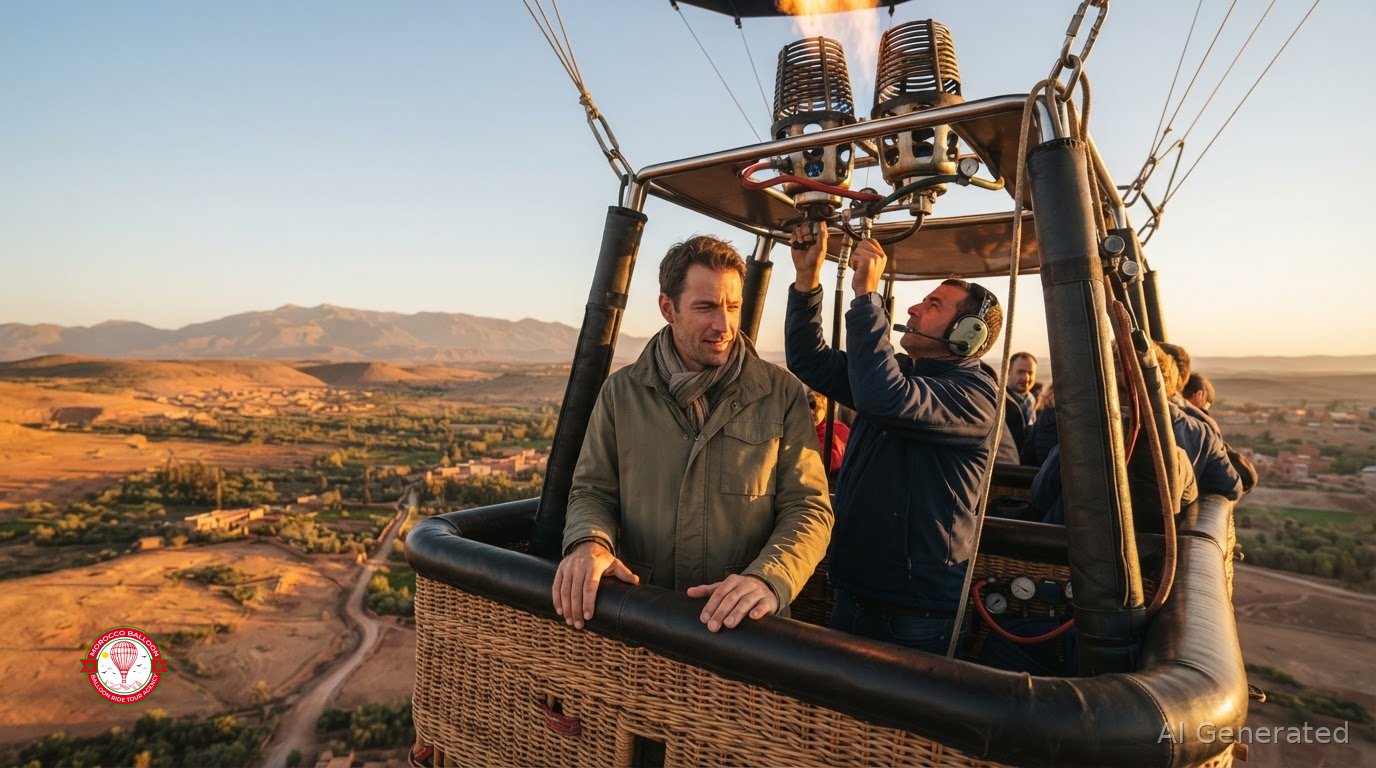
Above the basket, the burner directs flame into the balloon’s envelope to warm its air and support lift, operating in short, controlled bursts rather than running throughout the flight.
Tall passengers may notice a brief wave of warmth overhead when the pilot fires the burner, especially when standing beneath its frame. The heat is not a constant stream throughout the ride.
It’s natural to wonder how your height might affect your experience in the basket. The key details are where the burner sits, how the pilot uses its heat during ascent and descent, and what you may feel during a sunrise flight.
Key Takeaways
- Understand how the burner frame sits above the basket and why its position matters to passengers.
- Learn how burner heat warms the balloon’s envelope and helps create lift.
- See why the pilot uses controlled bursts of flame rather than continuous heat during the flight.
- Know what tall passengers may notice when the burner fires and how the sensation can vary in the basket.
Burner-frame placement above the basket
The basket carries passengers and equipment beneath the balloon’s envelope, with the burner mounted overhead on a frame. Nylon poles support the burners and help keep them from dropping onto occupants during landing. The burner sits above the passenger space, but the distance between a passenger’s head and the frame depends on the basket’s design and where that person stands. The basket, frame, and load function as one system.
Burner placement alone does not determine a passenger height or seating restriction. Where you stand depends on the basket layout and the pilot’s instructions. A taller passenger may be closer to the overhead frame, but height by itself does not establish a specific restriction. During boarding and flight, follow the pilot’s directions about passenger positions and stay within the designated area.
Basket capacity varies. Large baskets can carry up to thirty people, while one example system uses a five-passenger basket weighing 63.5 kilograms. The basket also carries equipment, so passenger capacity is not simply a count of available places. In that example, five passengers assumed to weigh 150 pounds each add 750 pounds. These figures illustrate how the passenger load contributes to the weight carried by the balloon.
The practical consideration is your position beneath the frame, not a particular height. A taller passenger standing near the burner may be more aware of it than someone farther away, but the frame’s location alone cannot predict how warm it will feel. The flame points into the envelope, and the poles hold the burner assembly above passengers. On landing, follow the pilot’s instructions and remain in your position in the basket. This helps the crew maintain clear passenger placement as the basket returns to the ground.
Burner heat output
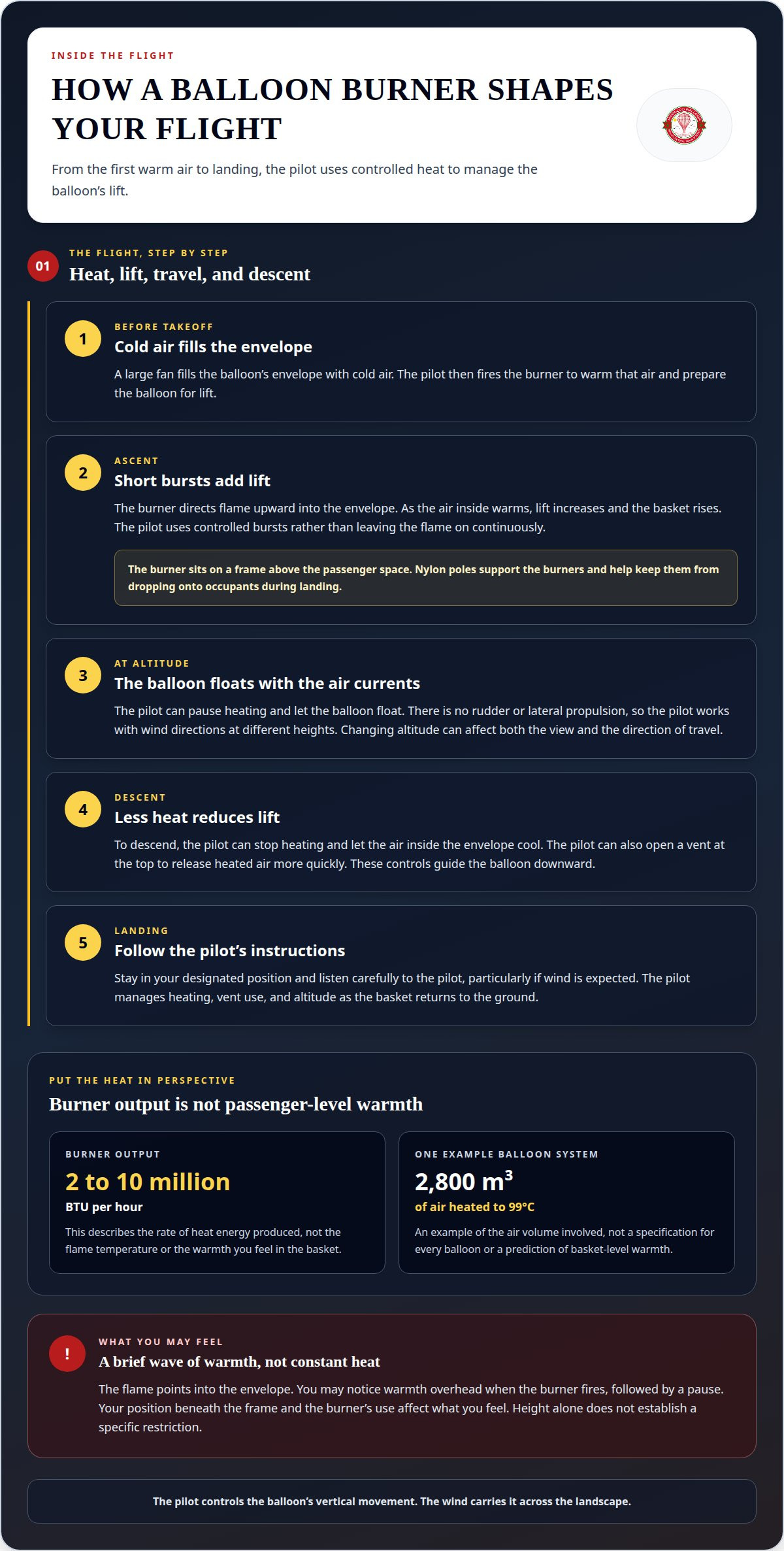
A hot air balloon burner produces between 2 and 10 million BTU per hour. This figure describes the rate of heat energy produced, not the temperature of the flame or the warmth reaching a passenger. Those are different measurements. A powerful burner can deliver heat to the envelope without that output translating directly into a specific temperature at basket level.
One example balloon system heats 2,800 m³ of air to 99°C. This shows the scale of the air volume involved, but it is an example system, not a specification for every balloon. The envelope’s air temperature is also distinct from burner output. Thinking of these as separate measurements helps make sense of technical figures without treating them as a prediction of what you’ll feel overhead.
Commercial passenger balloons often use dual- or multi-burner systems to provide the power needed to lift passengers. The pilot controls how much heat enters the envelope, adjusting burner use to the balloon’s needs. A burner’s output describes its heating capacity. It does not mean the burner runs continuously or that every burst feels the same to passengers.
For a tall passenger, a BTU-per-hour rating cannot tell you how warm the basket will feel. That sensation depends on the flame’s direction and use, as well as your position beneath the burner. The hot air stays inside the envelope, while the burner directs its flame upward. The output figure describes the balloon’s heating equipment, not how warm you will feel. The pilot uses that equipment to manage the balloon, and a brief burst may feel different from the quiet interval that follows.
A hot air balloon pilot can control the air temperature inside the envelope by regulating the heat generated by the burner. This links burner operation to the air’s temperature, but the output rating does not directly measure the envelope’s temperature. It describes heating capacity, not the temperature the air will reach during a particular flight.
For passengers, this distinction puts the equipment figure in perspective. It describes what the burner can provide, while the pilot’s control of the heat affects the air inside the envelope. Neither measurement alone tells you how warm the basket will feel.
Burner use during ascent and descent
Before takeoff, a large fan fills the envelope with cold air. The pilot then uses the burner to heat that air and prepare the balloon for lift. During ascent, additional heating raises the temperature inside the envelope, increasing lift and carrying the basket higher. The pilot controls each burst instead of leaving the flame on continuously, using the burner in response to the balloon.
At a chosen altitude, the pilot can pause heating and let the balloon float with the surrounding air currents. A hot air balloon has no rudder or lateral propulsion, so the pilot steers by working with wind directions at different heights. Changing altitude can therefore affect both the view and the direction of travel. The burner manages vertical movement, while the wind carries the balloon across the landscape.
To descend, the pilot can stop heating and let the air inside the envelope cool, reducing lift. The pilot can also open a vent at the top to release heated air more quickly. These controls work with the balloon’s open envelope, not an engine or a sealed chamber that pushes the basket downward. The fabric holds the hot air, while the vent provides a deliberate route for its release.
Near the burner, you may notice warmth during an active burst, followed by a pause as the pilot assesses the balloon’s response. This explains why the heat you feel can vary during a flight. The burner manages lift, not passenger-level temperature. During landing, listen carefully to the pilot’s instructions, particularly if wind is expected. The pilot’s control of heating, vent use, and altitude guides the balloon through ascent, travel, and descent.
These controls shape the balloon’s vertical movement in opposing ways. Increasing the temperature of the air inside increases lift and makes the balloon ascend; reducing its temperature decreases lift and makes it descend. The pilot can lower the balloon by stopping the burner or opening the vent at the top to release hot air.
Passenger experience near the burner
A burner burst may bring a brief wave of warmth overhead, while the flame is directed inside the envelope. Your position in the basket and the pilot’s instructions shape what you feel.
Passenger Heat Exposure Near the Burner
Passenger heat exposure is the warmth you may notice when the burner fires above the basket. If you’re tall, your head may be closer to the burner frame, but the sensation also depends on the flame’s direction and how long the burner runs. The basket layout affects where you stand in relation to the frame. The flame heats air inside the envelope rather than pointing toward passengers.
Burner Heat Safety and Injury Risks
The burner produces an open flame, so direct contact can cause burns, and hot air may feel uncomfortable at close range. During inflation, the ground crew stays clear of the flame, and nylon poles support the burners above passengers. In flight, remain in the basket and follow the pilot’s directions, especially during landing. Never touch the burner or its equipment.
Clothing and Actions to Avoid Burner Heat
Wear sturdy shoes for standing in the basket, and don’t reach toward the burner frame or flame. Follow the pilot’s directions rather than changing position for a better view. If a burner burst feels uncomfortable, stay in your place and tell the pilot or crew. Keep loose clothing clear of equipment, and leave burner controls to the crew.
Pre-Flight Disclosure of Burner Heat Risks
The pre-flight briefing is the time to hear the pilot explain passenger positions and instructions for landing. Listen carefully for guidance on remaining inside the basket and responding to crew directions. If you have a concern about your height or proximity to the burner, raise it during the briefing. A private compartment flight is one available flight option.
Morocco Balloon
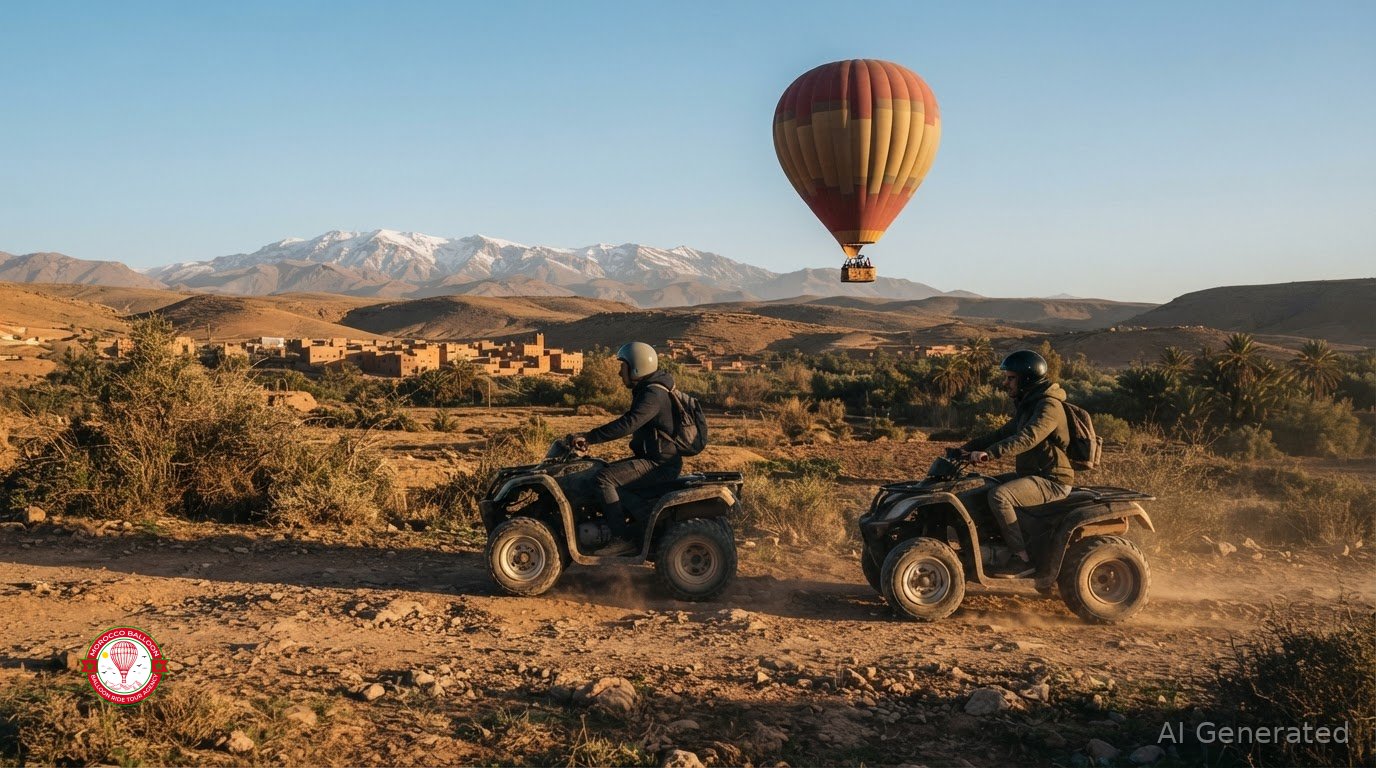
We offer sunrise balloon flights across the stunning North African countryside, operated by our licensed pilots and following strict safety protocols. If you’re considering a flight and want to understand how burner use fits into the passenger experience, this is a natural next step after learning how the system works. We can help you explore a balloon experience that fits your plans, from a flight on its own to a combination with a cultural city and souks tour, Atlas Mountains day trip, or quad biking.
Your attention can stay on the changing light and wide views, while our pilot manages the burner during flight. For questions as you plan, contact us.
Plan Your Sunrise Flight With Confidence
Understanding the impact of hot air balloon burner heat on tall passengers can help you picture the flight more clearly. Your comfort and travel plans can guide your choice: consider whether you want a sunrise flight or would prefer a package that combines the flight with another experience.
Morocco Balloon offers a Hot Air Balloon Flight and Quad Biking, a Marrakech City and Souks Tour with Hot Air Balloon Ride Half Day, and a Hot Air Balloon Experience and Atlas Mountain Day Trip. The team can help you understand the flight experience and choose an outing that suits your visit. Its pilots and ground crew bring practical experience to each trip, so you can focus on the unfolding views and the day ahead.
If you’d like to talk through your plans or ask about the flight, contact Morocco Balloon. Your Marrakech sunrise adventure can begin with a simple conversation.
Frequently Asked Questions
How hot does a hot air balloon burner flame get?
A burner’s heat output is not the same as a flame-temperature reading. The figures available describe burner output as between 2 and 10 million BTU per hour, while air inside the envelope reaches approximately 90°C to 120°C. Those measurements describe different things. The envelope temperature doesn’t tell you the exact flame temperature or the warmth you’ll feel at passenger level.
How far above passengers is a hot air balloon burner?
The burner is mounted above the basket on a frame supported by nylon poles, but there is no single clearance measurement that applies to every balloon. Basket and frame arrangements can differ, so one distance would not describe them all. The practical point is that the burner is overhead, not at passenger level. Follow the pilot’s positioning instructions while boarding and during flight.
What does burner heat feel like inside a hot air balloon basket?
You may feel a brief wave of warmth overhead when the burner fires, followed by cooler intervals between bursts. The sensation depends on your position in the basket and the direction and duration of the flame. Heat is not constant throughout the ride. If it feels uncomfortable, stay in your assigned place and tell the pilot or crew.